Change or rekey · Toronto
Vintage Mortise Lock Service
The interior bedroom doors on the second floor have the original mortise latches, and none of them close any more.
In plain words
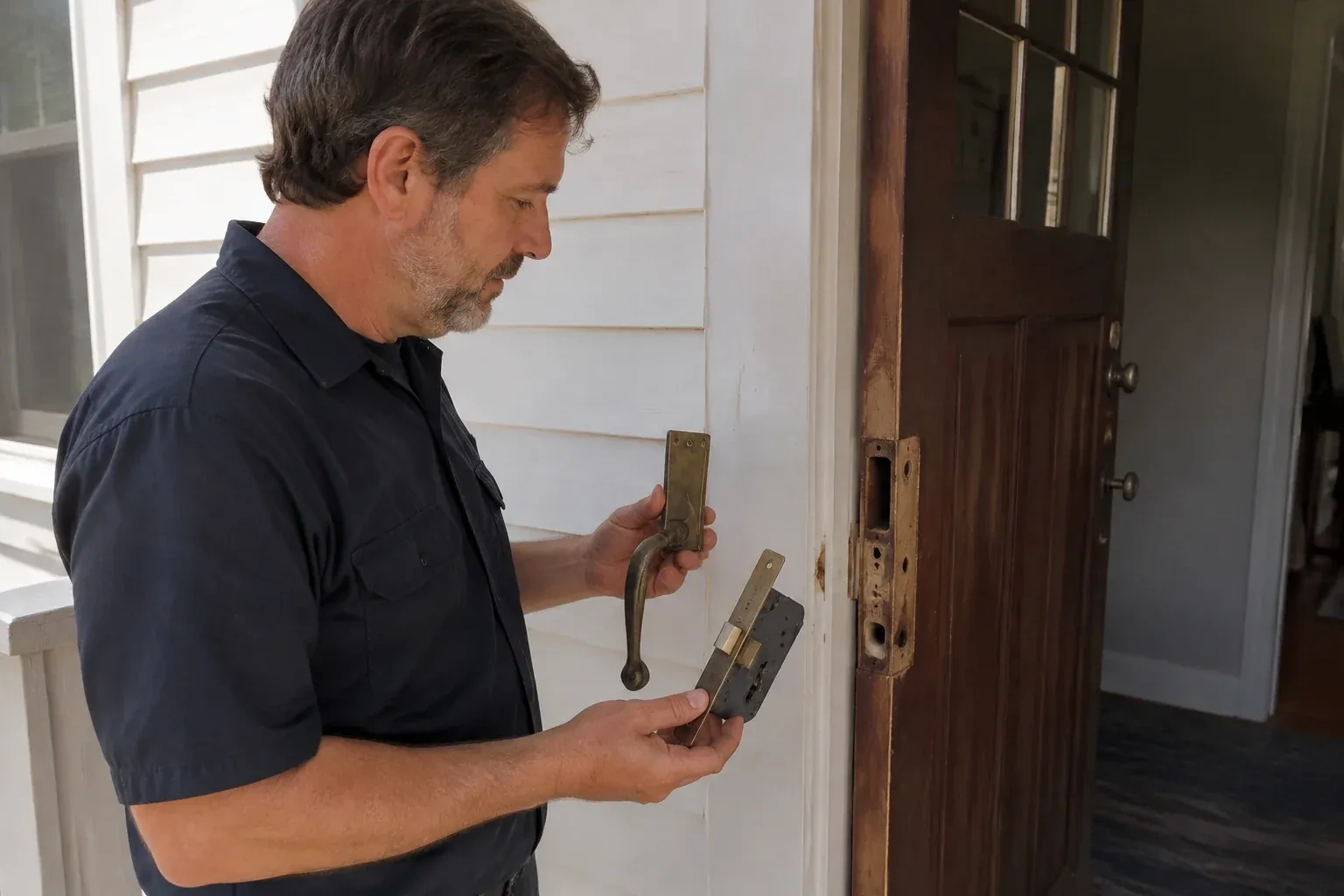
Occasionally a case really is finished, with a cracked body, a bolt worn to a sliver or a hub broken in two, and the answer is a replacement that respects the door. Reproduction mortise cases are made in common vintage sizes and backsets, and a modern case with a pin-tumbler cylinder can fit many old pockets with little woodwork once its faceplate and hub also line up. The locksmith measures the case, backset, faceplate and trim spacing before ordering, aiming for the new case to drop in with your original knobs and escutcheons going back on. From the hallway, the door looks untouched; it just works.
How the visit goesAfter a wet summer the entry door sits lower in its frame. The lock works perfectly when the door is open, but with it shut you have to lift the handle and shoulder the door to get the deadbolt to throw.
Vintage Mortise Lock Service
How the visit goes
Condition of the wood around the pocket
The mortise pocket and the screw holes in the door edge carry the whole lock, so their state is part of the assessment. The locksmith probes the faceplate screws for grip, looks for cracks running from the pocket into the stile, and checks whether an earlier repair enlarged the pocket or packed it with something soft. Stripped holes, a split edge or a case that shifts when the knob is turned change the plan: dowelling and re-drilling, a hardwood filler, or longer screws may be needed before the rebuilt case can be trusted. Finding this now avoids surprises once the lock is back in the door.
Cutting a bit key to the lock
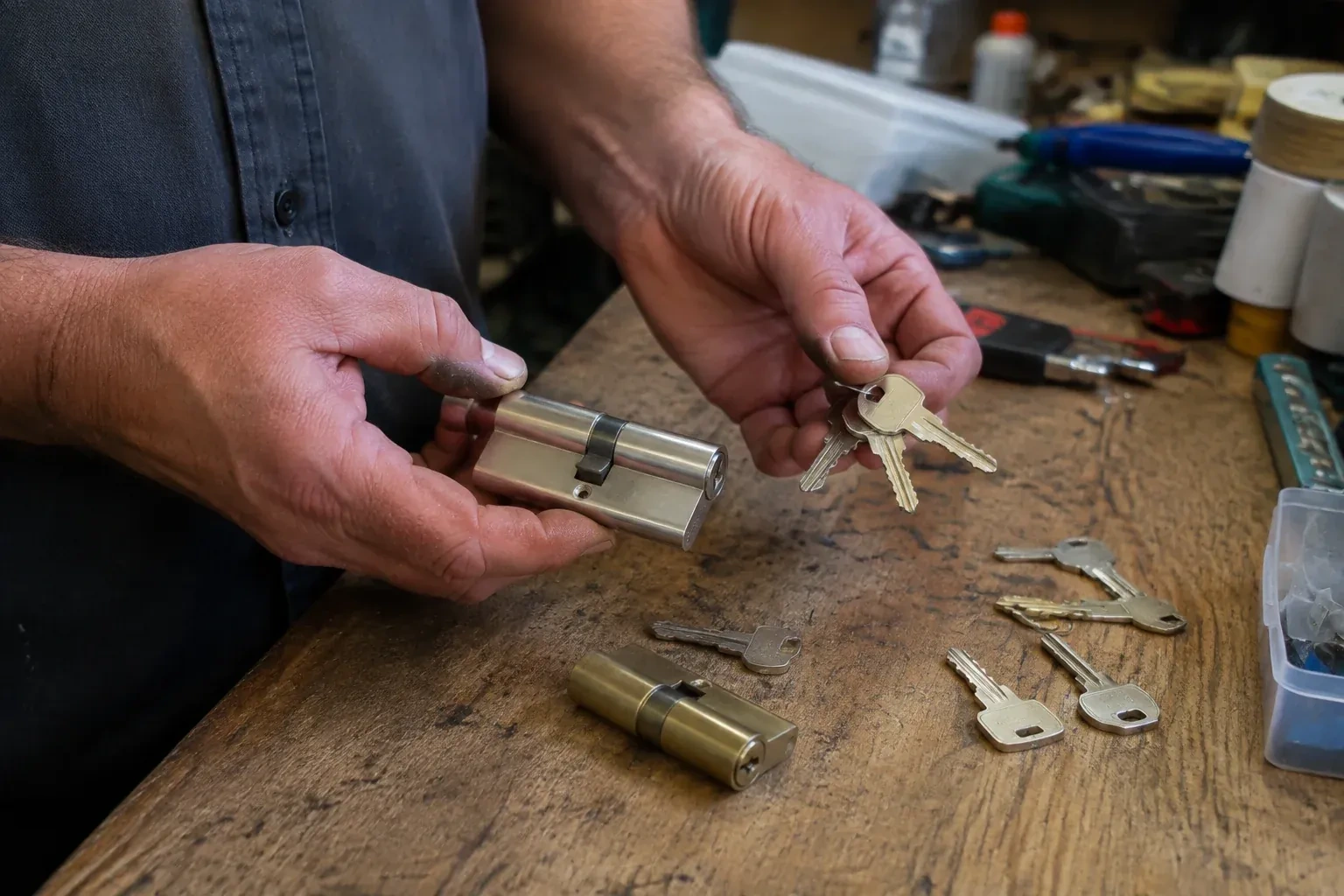
For a bit-key lock, keys are made to the case rather than copied from a pattern. A blank with the right bow, shank and bit size is chosen, then the bit is filed by hand to clear the wards inside the case and to lift each lever to the correct height. The key is tried, marked, filed again and tried again until it turns the bolt cleanly from both sides. A second key is made to match while the first is fresh. Where a working original exists, it is used as a guide and the new key is cut to it, and a worn original can itself be gently restored if the customer wants to keep using it.
A lock that feels new and looks old
What you get back is the door you had, with the lock working as it was designed to. The knob returns level with a snap, the latch catches when the door is pushed shut, the deadbolt throws with a light turn of the key or the thumb-turn, and the key goes in and out without a wiggle. Nothing on the face of the door has changed except that the brass has been cleaned where it was handled. The locksmith runs through each function with you from both sides before leaving, so the standard of what has been done is something you have seen, not something you have been told.
Vintage Mortise Lock Service
In the van
Warding files
Light lock oil
Hardwood dowel and wood glue
Hub followers and lever packs
Latch and hub springs
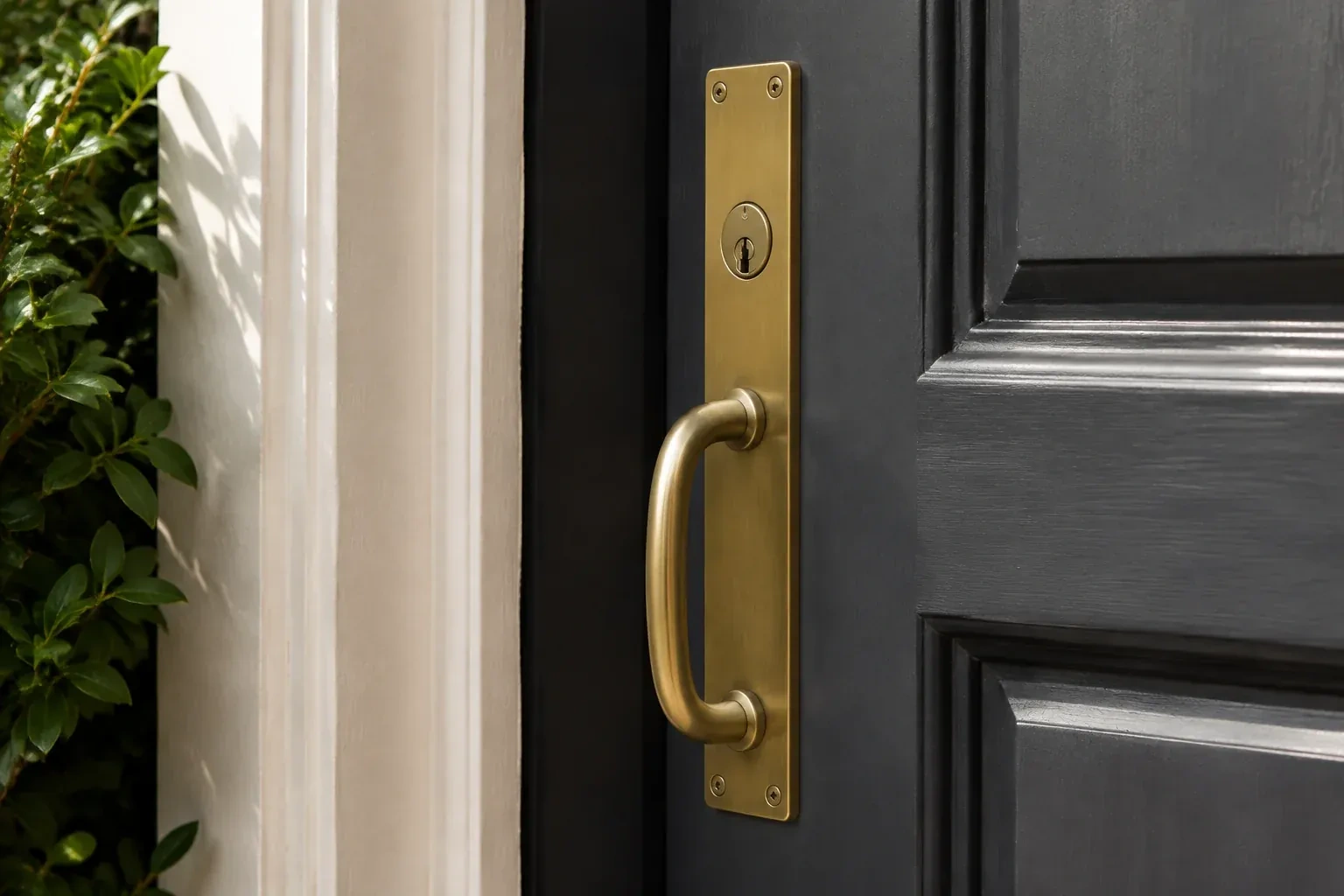
Vintage Mortise Lock Service
What affects the quote
Keying doors alike
Bringing several interior locks onto one bit key, or several cylinders onto one flat key, is extra bench work per lock and is simplest to arrange while all the cases are out on the same visit.
Whether the door has to come off its hinges
Some mortise cases can be serviced with the door hanging in place, while a tight jamb or a stubborn case sometimes means lifting the door off its hinges onto a level bench. That step is identified once the case is open and the repair needs are clear.
Travel and access
Distance to the property and how easy it is to work at the door, on a busy entry or a third-floor walk-up, are part of any call-out and are stated when the visit is booked.
What to have ready
- Can you send a photo of the plate in the door edge and one of the keyhole?
- How many keys would you like to have afterwards?
- How many doors need attention, and are any of them interior doors?
Vintage Mortise Lock Service: questions
QuestionsWhat if the case is too worn to repair?
Then a replacement case goes into the existing pocket. Reproduction mortise cases are made in the common vintage sizes and backsets, and a modern mortise case with a cylinder fits many old pockets with minor trimming. The locksmith measures the case height, depth, backset and trim spacing before ordering, aiming for the new case to drop in with the original knobs and plates going back on, though a small pocket trim or fixing change is sometimes needed. Cutting the door for a different kind of lock is the last choice.
What information helps before you come out?
Whether the door takes a skeleton-style bit key or a flat key in a round cylinder, roughly when the house was built, what the knob and bolt are doing, and whether the trouble is worse with the door closed. A photo of the faceplate in the door edge and one of the keyhole side is worth a great deal. Mention how many doors are involved and how many keys you would like afterwards.
How should I look after the lock once it is serviced?
A drop of the right lock oil into the latch and bolt once a year is plenty. If the lock has a pin-tumbler cylinder, use whatever lubricant that cylinder's maker specifies, since some take a dry graphite or PTFE product and others a specified liquid one. Try the latch and deadbolt each spring and fall; if the bolt starts to scrape, the strike wants a small adjustment before anything is strained. Keep bit keys out of a pocket where they bend.
Related services
- Deadbolt InstallationThe front door has a handsome lever and a keyed knob, and that is all.
- Lock Replacement & UpgradeThe century home's original mortise lock takes a key the size of a spoon, sticks in humid weather and has worn its strike to a groove.
- Smart Lock InstallationThe rental turns over every few months and each time you drive across town to swap keys, then wonder whether copies were made.