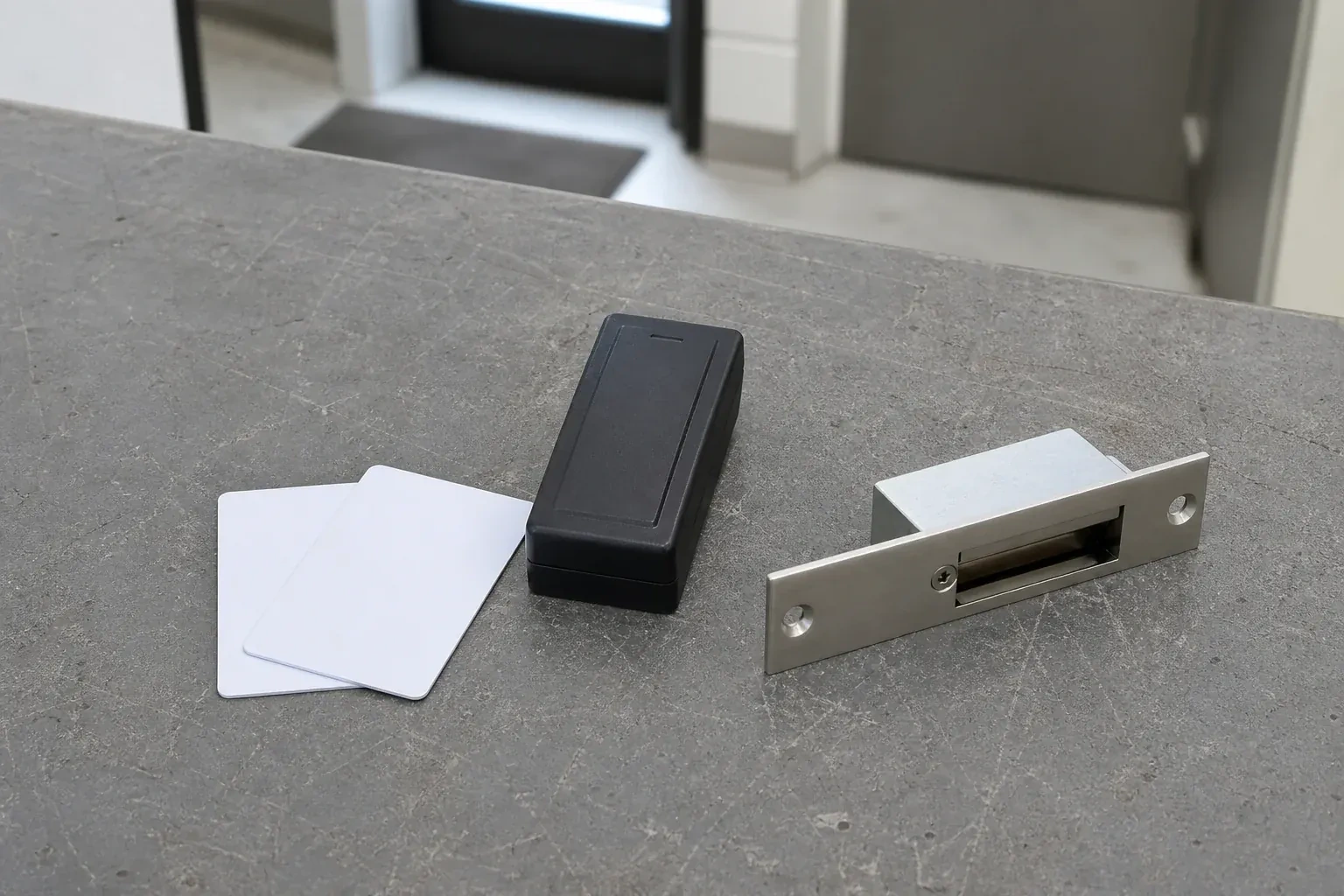

Commercial · Toronto
Access Control Installation
The back door of the shop runs on one key, and by now it lives on six different rings: yours, two managers, a cleaner, a supplier who restocks early, and a keyholder nobody quite remembers approving.
In plain words
A building already running an intrusion alarm or a camera system gains from an access control installation that speaks to them rather than sitting apart from them: an arm-and-disarm event that lines up with the person who unlocked the door, a camera clip tagged to a specific credential instead of a blank time stamp. The reader and the lock still do the physical work of the opening; the value is in how the record from that opening lines up with everything else the building already tracks.
How the visit goesThe keypad on the side door has started sticking on cold mornings, codes get shared instead of reset, and half the staff still remember a code you meant to retire two hires ago.
Access Control Installation
How the visit goes
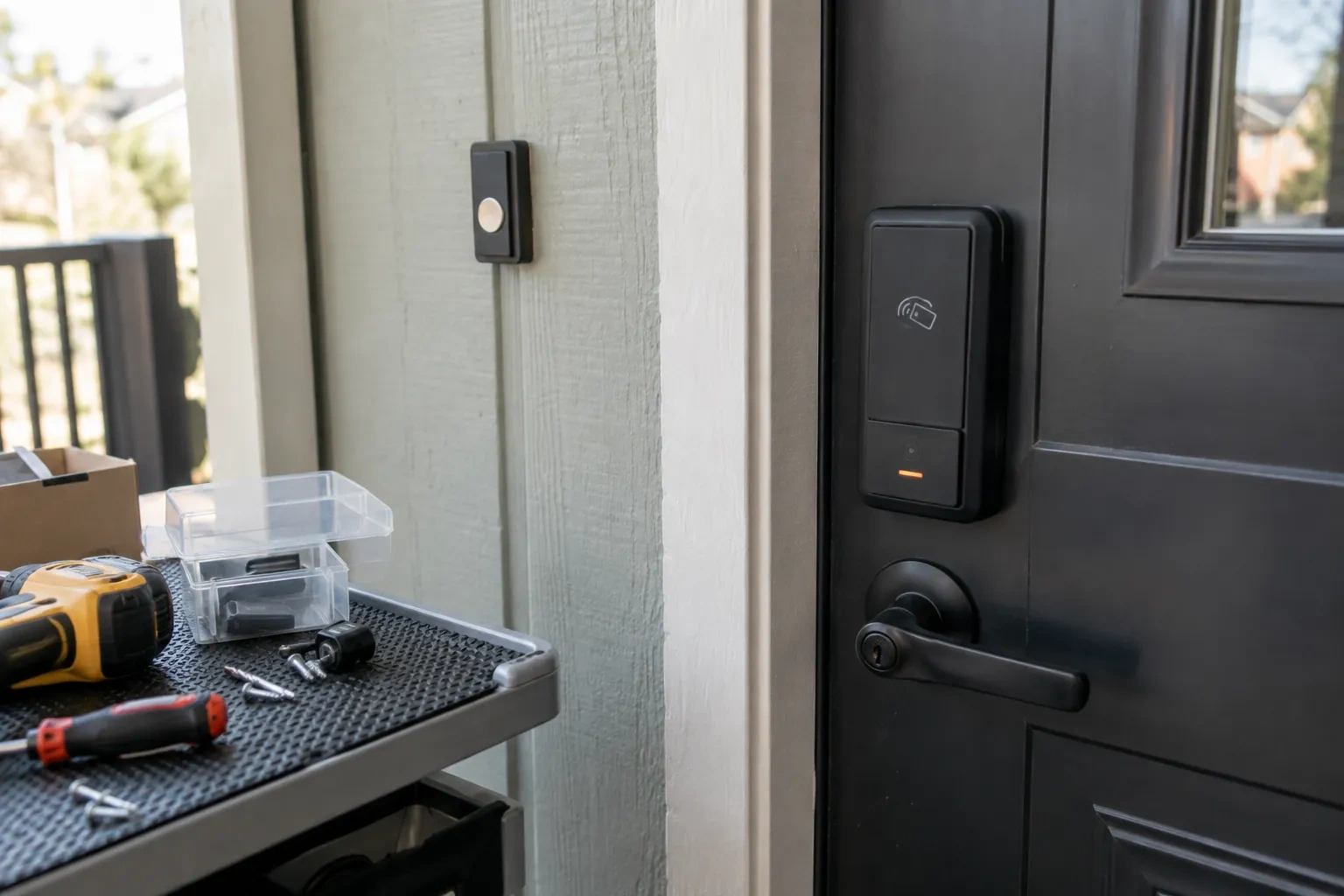
Power, cabling, and where the controller will live
An access control system needs somewhere for its low-voltage wiring to run and somewhere secure for the controller and its power supply to sit, away from public reach. The survey traces a path from each opening back to that location, checks whether existing conduit or cable trays can be reused, and confirms what power is already available against what a new circuit or a battery backup needs to supply. A building with exposed ceilings or accessible risers is a simpler pull than one with finished walls throughout, and that difference shapes how the installation is sequenced.
Commissioning day: training the people who will run it
The last step is not technical: it is sitting down with whoever will administer the system and walking through adding a person, revoking a lost card, pulling an entry log for a specific door and date, and changing a schedule for an upcoming holiday or event. The locksmith answers questions on the spot rather than leaving a manual to be read later, confirms the administrator account works with full access, and leaves contact information for anything that comes up once the system has settled into daily use.
Reading the entry log
Every controller keeps a record of which credential was presented at which door and when, and, where a door position switch is fitted, whether the door actually opened; that log is available to the administrator whenever it is needed, not only after something has gone wrong. Pulling a recent day's entries for the stockroom, checking whether the loading dock was opened outside its scheduled window, or confirming a contractor's credential was only used on the days they were on site are ordinary lookups rather than a special request, though the record shows the credential used rather than proof of who held it. Reviewing the log occasionally, rather than only when there is a problem, is a genuinely useful habit.
Access Control Installation
In the van
Card and fob readers
Request-to-exit devices
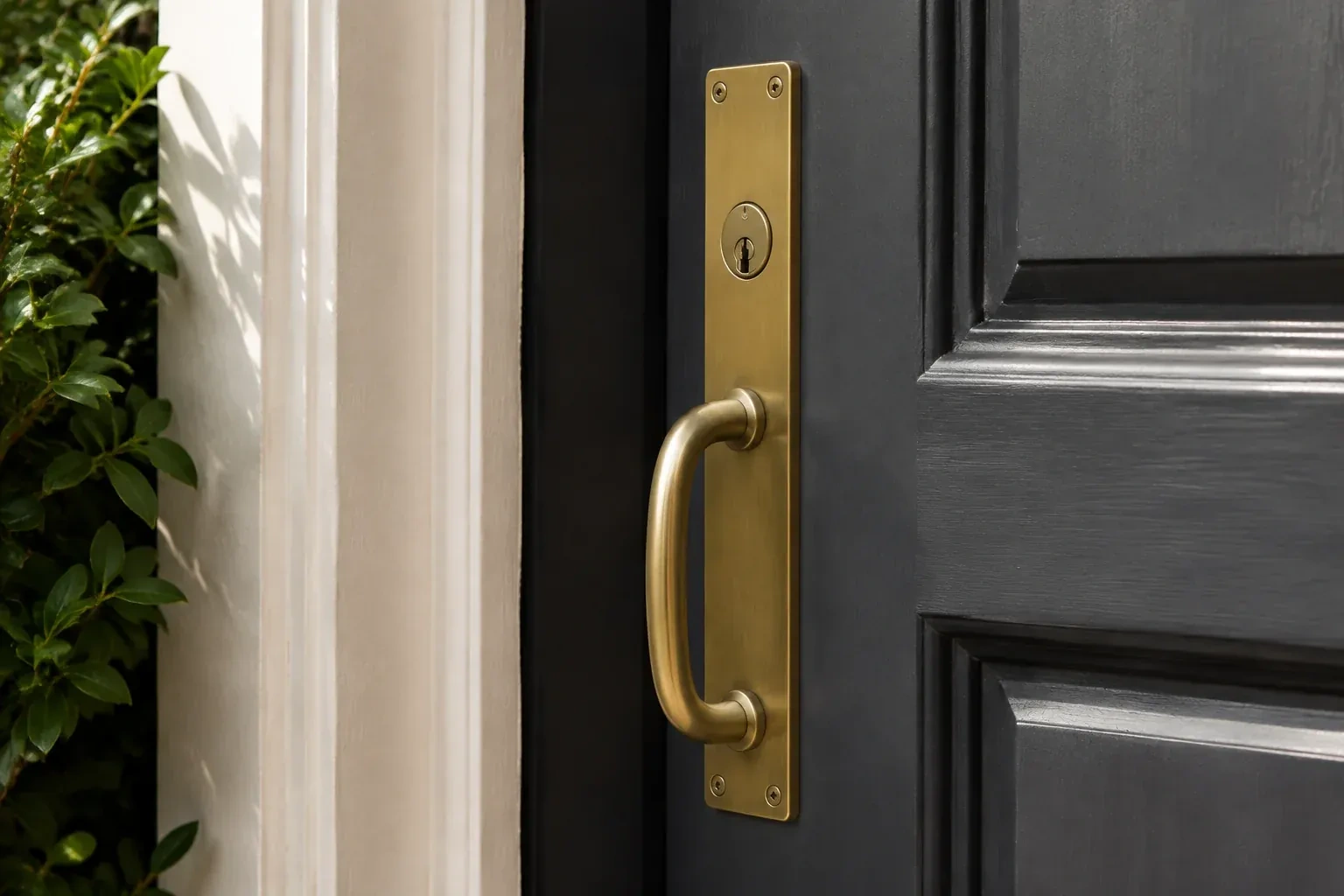
Mechanical override cylinders
Electric strikes
Fire alarm interface relay
Access Control Installation
What affects the quote
How many doors are being controlled
A single entrance and a building with a dozen openings are different jobs in scale rather than kind, and the number of doors, readers and locks involved is the largest single factor in sizing the work.
Network readiness for a networked system
A networked controller needs a suitable connection point and technology-department approval to join the building's network; where that is not already in place, preparing it is a separate piece of the job from the door hardware itself.
How many schedules and access levels are needed
A building with one schedule for everyone is quicker to configure than one splitting doors, hours and roles into several access levels, since each combination has to be set up and then tested on its own.
What to have ready
- Do you want cards, fobs, keypad codes, or a mix of these?
- Is any of these doors also a fire exit or required exit route?
- Is there network access near where a controller could be mounted?
Access Control Installation: questions
QuestionsCan different doors run on different schedules?
Yes, and this is one of the more useful parts of the system. A front office can unlock for regular business hours, a stockroom can allow only two credentials at any hour, and a loading dock can release only during a set delivery window. Schedules are set per door and per access level in the controller, and can be changed at any time without touching the hardware itself.
What happens to our records if we later work with a different provider?
That depends on the platform: the entry log and configuration can live on a local controller and its on-site software, which stay with the business regardless of who installed them, or on a cloud-managed subscription service, where continued access and data export follow that provider's own terms. It is worth confirming at the time of installation which arrangement applies, so the business knows what happens to its records if it later changes providers.
Will this work with our existing alarm or camera system?
In most cases, yes. An access control installation can be planned to share information with an existing alarm panel, so an arm-or-disarm event lines up with whoever unlocked the door, and with a camera system, so a recorded clip can be matched to a specific credential rather than only a timestamp. The exact integration depends on what the existing alarm and camera equipment support.
Related services
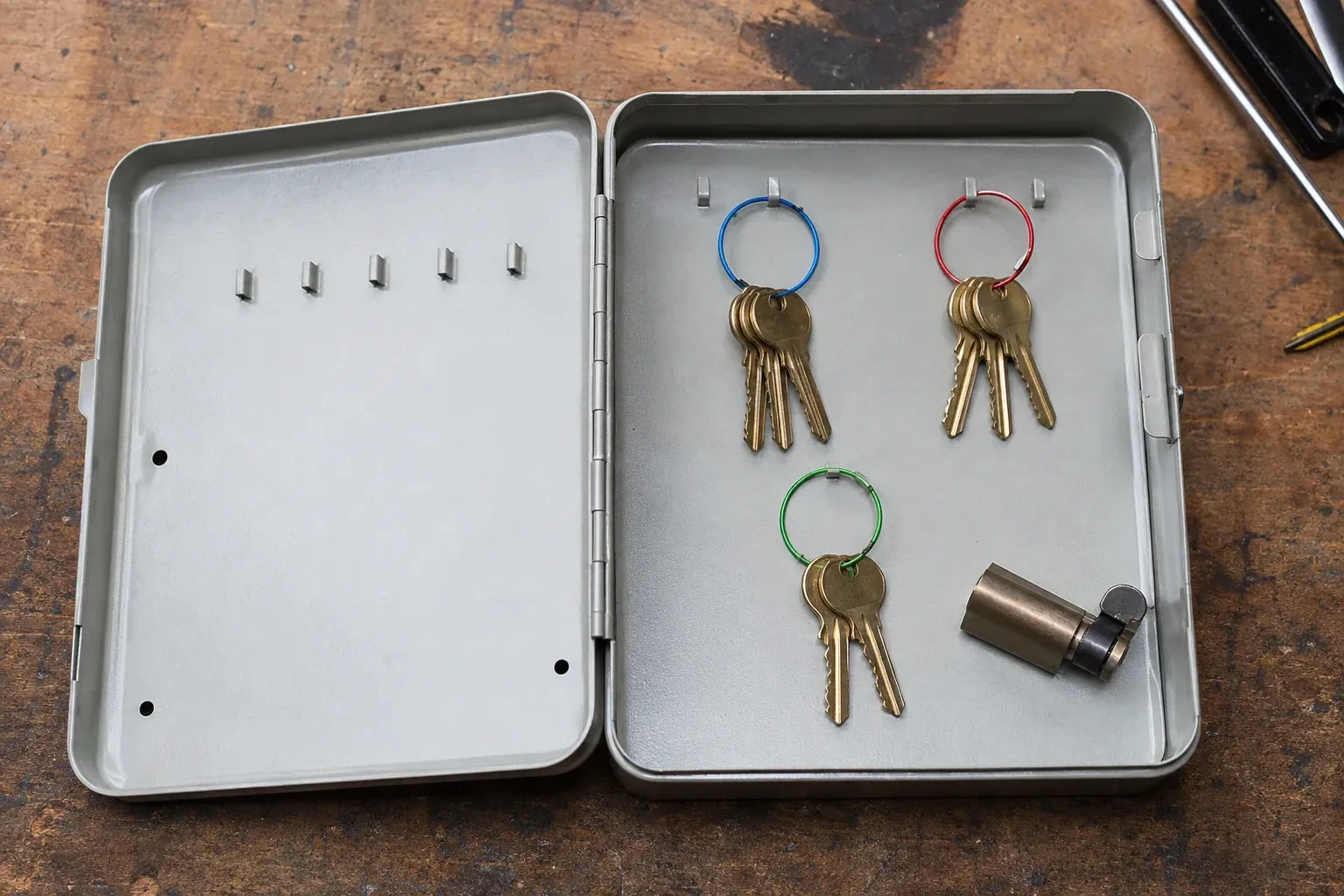
- Master Key System DesignA dental office wants the front desk to lock up at night without ever holding a key to the room where patient records and controlled supplies are stored.
- Panic & Exit HardwareThe crossbar on the loading-dock door barely returns anymore.
- Commercial-Grade Lock ReplacementAn inspection report flagged the rear exit as needing hardware that opens with one motion and no key, and that door currently has an ordinary keyed knob on the inside.