Car keys · Toronto
Key Fob Programming
A new driver has joined the household, and the one existing fob is the only key anyone has ever had cut for this vehicle.
In plain words
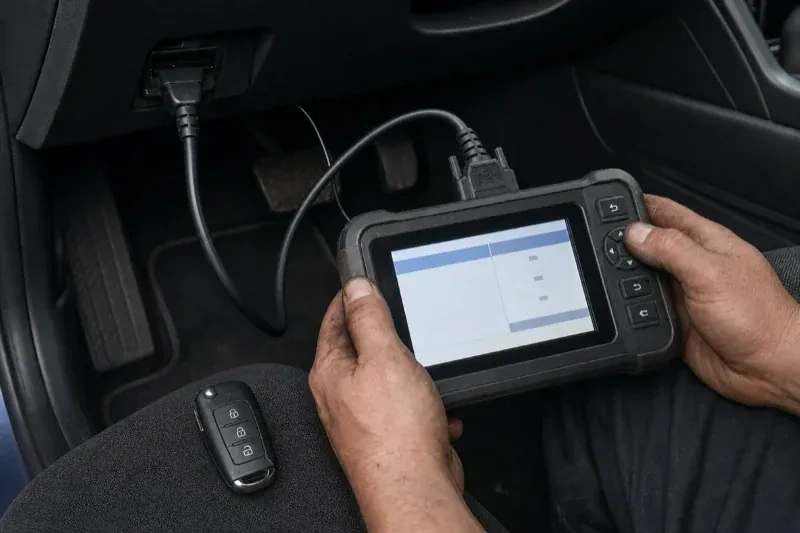
Underneath the plastic case, a fob is a small radio and, on most modern vehicles, a chip the immobilizer reads before allowing the engine to start. Programming has to satisfy both halves: the buttons that lock and unlock, and the hidden authorization that lets the key turn the engine over. A fob that only handles one half explains why some buttons keep working while the vehicle still refuses to start, and programming addresses whichever half was never registered correctly.
How the visit goesA replacement fob just arrived in its box, shiny and untouched. It looks identical to the one that has ridden on the keyring for years, but the car ignores it entirely: no lock click, no start authorization, nothing. It needs to be introduced to the vehicle first.
Key Fob Programming
How the visit goes
Confirming who the vehicle belongs to
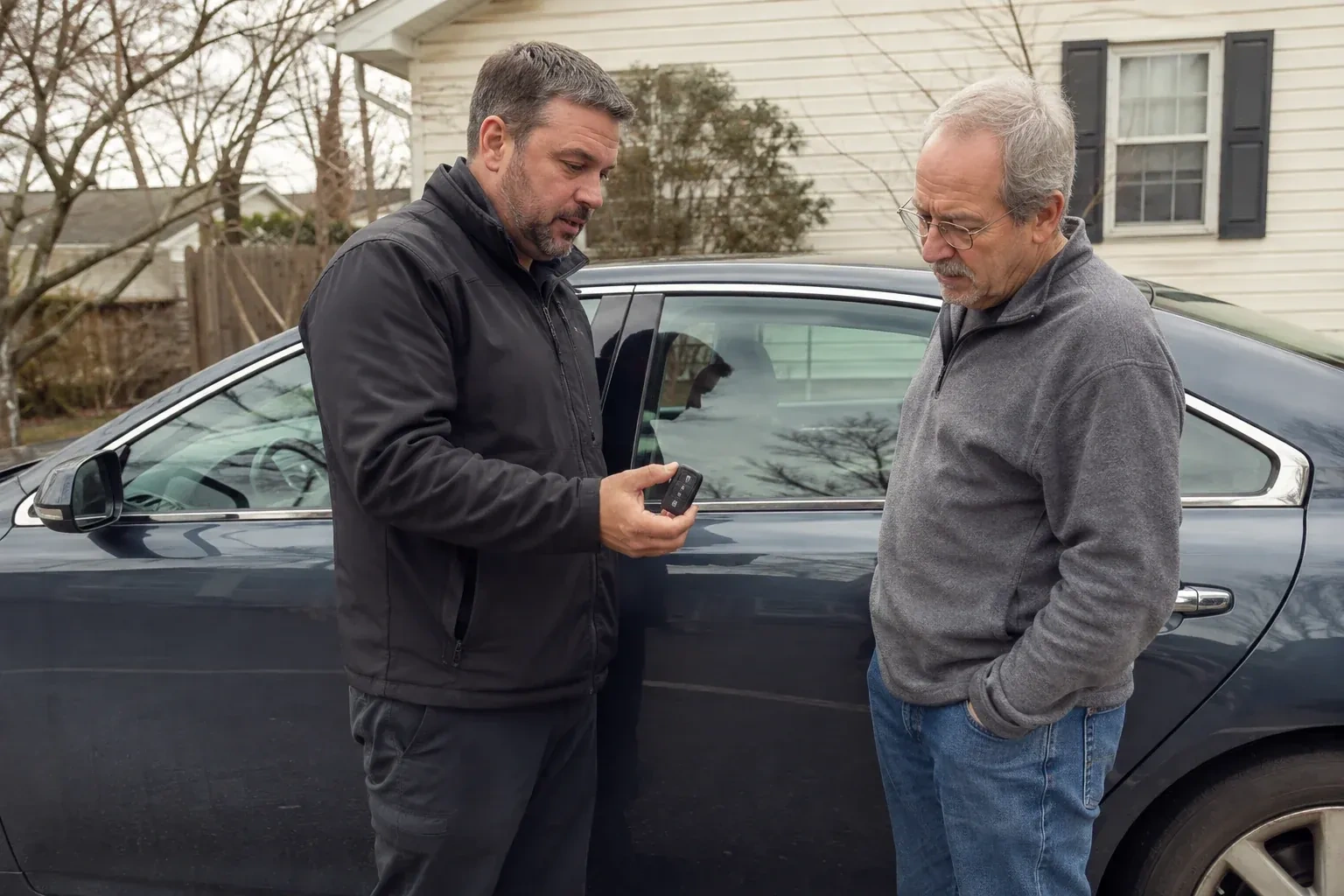
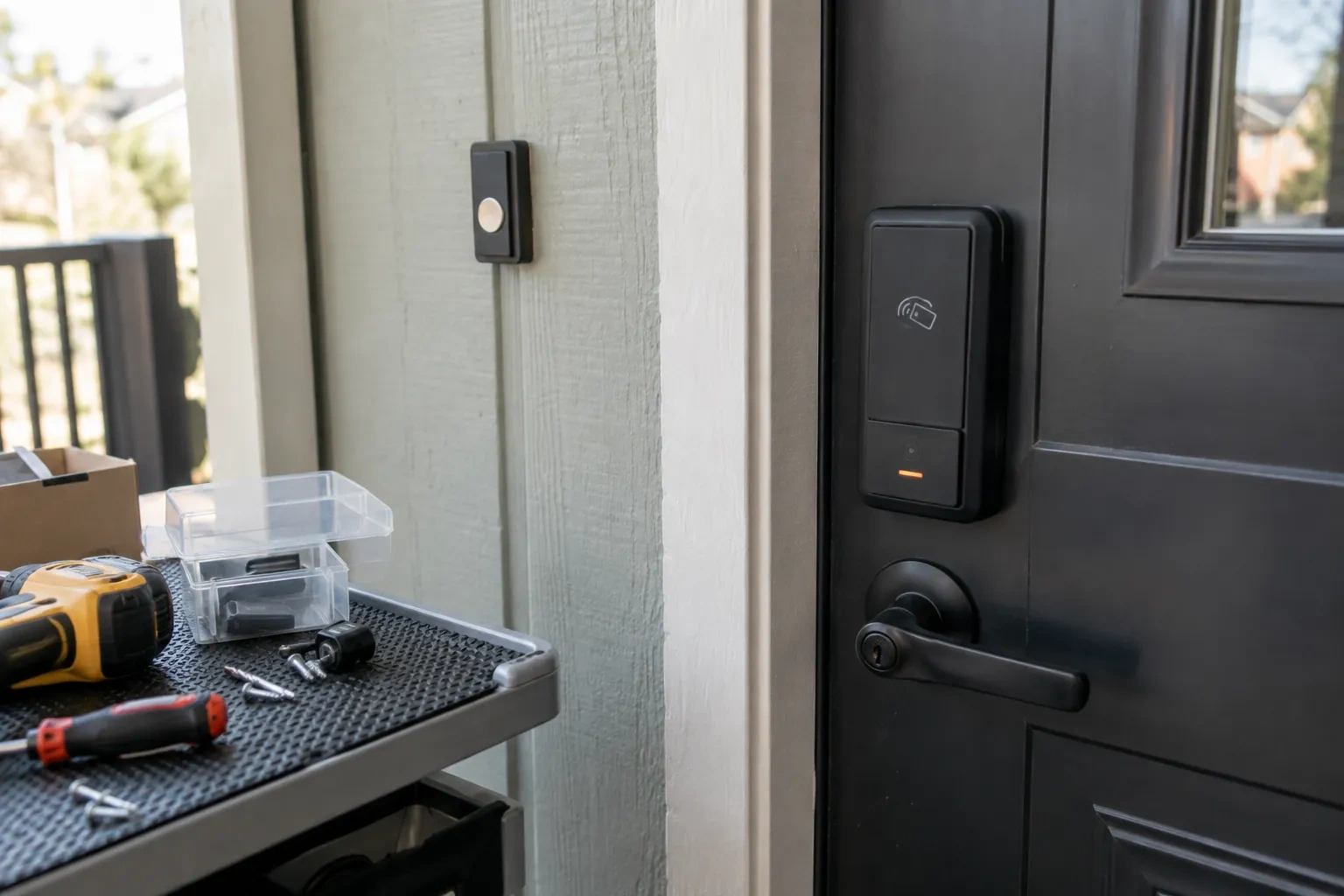
Before any fob is touched, the person requesting the work is asked to show a claim on the vehicle: registration, a bill of sale, an insurance document, or simply being present with the vehicle and its existing key. This matters for a car in the same way it matters for a house, since a fob is a way into someone's property and, on many vehicles, a way to drive off in it. Confirming ownership takes a minute at the start of the visit and settles a question that would otherwise hang over the rest of the work.
Removing a lost fob from the vehicle's memory
Adding a new fob solves half the problem when the old one is genuinely missing rather than simply misplaced at home; the other half is telling the vehicle to stop recognizing the fob that is out there somewhere. The procedure follows that model's own lost-key route: some delete just that one fob's authorization and leave the others untouched, while others first erase every known credential and then relearn the ones you keep, so a household with three fobs and one lost one still ends the visit with two working fobs and a lost one that no longer operates the vehicle electronically.
The lost fob is no longer a working key
Once a missing fob's electronic authorization has been removed following that vehicle's procedure, whoever is holding it has a fob whose buttons and starting function no longer work, though a mechanical blade built into it can still open an unchanged door lock. On many vehicles the remaining fobs are unaffected by that removal; on others, retained fobs are relearned as part of the same procedure and work the same afterward either way. It is worth telling the rest of the household which fob was retired, so nobody wastes a moment on a keyring wondering why the button in their hand suddenly does nothing at all.
Key Fob Programming
In the van
Diagnostic port interface cable
Mechanical key blank
Coin-cell fob battery
Precision case-opening tools
Manufacturer security access code
Key Fob Programming
What affects the quote
Distance to the vehicle
Since the equipment travels to the vehicle rather than the other way around, how far the visit has to travel is one of the ordinary factors reflected in any mobile automotive quote.
Condition of the fob already in hand
A fob with a cracked shell, worn buttons or a fading battery may need parts beyond programming alone, and any repair work is priced as its own line rather than folded silently into the visit.
Which key system the vehicle uses
A basic remote-and-blade key, a transponder key, or a full proximity fob with passive entry and remote start each involve different parts and different procedures, and that difference is reflected in the quote from the first assessment.
What to have ready
- Is any fob genuinely lost, or just misplaced at home?
- Does the car currently start with the fob you have?
- Is this a remote, a transponder key, or a proximity fob?
Key Fob Programming: questions
QuestionsDo I need to prove I own the vehicle before a fob is programmed?
Yes, and it is asked for the same reason a locksmith checks identity before opening a house: a fob is a way to drive off in someone's vehicle. Registration, a bill of sale, an insurance document, or simply being present with the vehicle and an existing key generally settles it. This step protects the actual owner as much as anyone, including a future owner who buys the car from you.
What should I do if my fob gets wet?
Remove the battery as soon as possible and let the fob dry completely before testing it again, since a battery left in contact with a damp circuit board usually causes the lasting damage rather than the water itself. If the fob still fails to respond once it is dry, the shell and battery contacts are worth checking before assuming the electronics are beyond repair.
Why do my fob's buttons work but the car still won't start?
This usually points to two separate systems handling two separate jobs: the remote's buttons operate the locks and alarm over radio, while a hidden chip in the fob authorizes the engine to start once it is recognized inside the vehicle. When one half is registered and the other isn't, or a chip has failed, the buttons keep working while starting authorization does not.
Related services
- Car Key ReplacementThe engine cranks, catches for a second and dies, and a small key-shaped light keeps blinking on the dash.
- Spare Car Key DuplicationA teenager just passed a driving test and reasonably wants a key of their own rather than negotiating over the family's single copy every time the car is needed.
- Transponder Key ProgrammingThe car came with a single key when the sale went through, and that key is the only thing standing between the household and being stranded.