Lockouts · Toronto
Broken Key Extraction
The key went in like any other morning, you turned it, and something gave with a small metallic click.
In plain words
Two facts shape the job before the locksmith arrives: whether the door is locked or unlocked, and whether any of the key is showing. A fragment that protrudes can often be gripped and drawn straight out. One flush or deep needs extractors worked in alongside it. If the plug turned before the key broke, it has to be eased back to its resting position first so the pins line up and release the blade. A locked door means the extraction is followed by opening the lock; an unlocked one means securing it is the priority. Either way the door ends up locking with a key that fits.
How the visit goesThe key went in like any other morning, you turned it, and something gave with a small metallic click. The bow is still between your fingers. The rest of the blade is sitting inside the deadbolt, and the door is locked.
Broken Key Extraction
How the visit goes
Checks particular to a vehicle
A car adds a few questions. Did the key break in the door, the trunk or the ignition? Does the head in your hand hold a transponder chip or remote, and does the car start with the spare if there is one? Is the steering wheel locked, which can hold an ignition cylinder under tension and pin the fragment in place? Do the other doors open with the same key, or is the vehicle on a different key for the ignition and doors? These answers decide whether the job is a door extraction and a new blade, or an ignition extraction that needs the wheel freed and the wafers checked first.
Drawing it out with a hook extractor
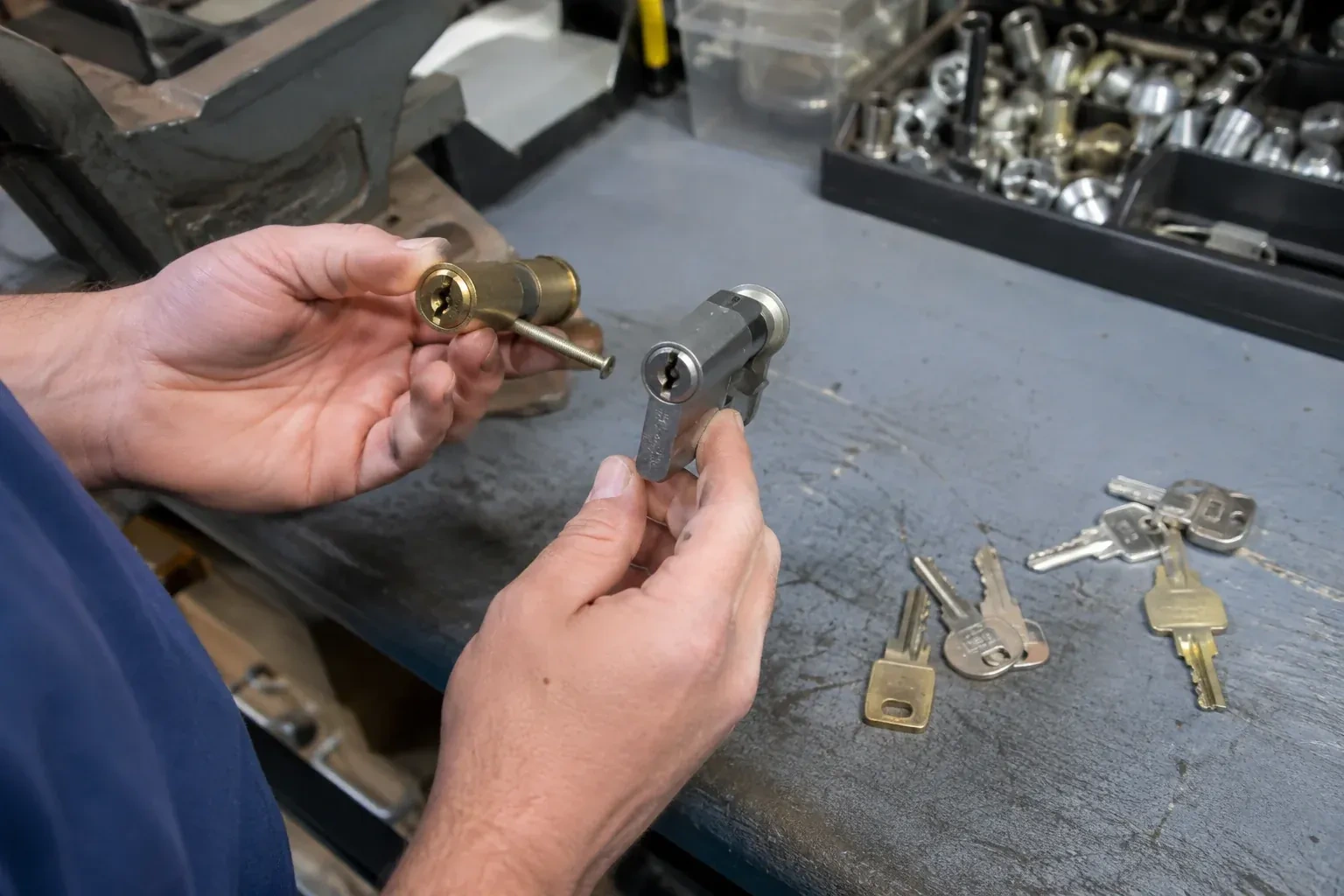
Every keyway has grooves, called wards, that run along its length above and below the blade. A hook extractor is a slim strip of spring steel thin enough to ride in one of those grooves beside the fragment. The locksmith slides it in past the broken piece, rotates it slightly so the barbed tip catches a cut in the blade, and draws it back out in a straight line. The pins are lifted clear as the piece passes them, exactly as they are when a key is withdrawn. It is a patient, felt process, and the cylinder is untouched by it.
Your car key, rebuilt rather than replaced
For a vehicle, the head of the key that carries the transponder chip and remote buttons has usually been saved, and a new blade cut and fitted to it, so the car recognizes the key as it always did. The door lock and ignition have been tested with it, and the ignition wafers checked for damage from the break. It is a good moment to have a second complete key made, since a car with one key is a car one snap away from a tow. Lightening the key ring so it does not hang on the ignition adds years to both key and cylinder.
Broken Key Extraction
In the van
Manufacturer-approved cylinder lubricant
Spiral key extractors
Replacement cylinder or deadbolt
Compressed air for the keyway
Plug follower and cap tool
Broken Key Extraction
What affects the quote
Rekeying other doors to match
If the cylinder ends up rekeyed or replaced, matching the other exterior locks to the new key is priced per cylinder, and simplest while the locksmith is already there.
Anything added since the break
Glue, a second key or marks from a screwdriver mean clearing and sometimes repair before extraction can start, and that added time is named in the quote.
Locked or unlocked door
If the door is locked, the extraction is followed by opening it, which is quoted as its own part of the visit. If the door is open, the work is extraction and securing.
What to have ready
- Has anything been put into the keyway since, such as tweezers, glue or another key?
- Is any part of the key still visible above the face of the lock?
- Is the door or vehicle locked or unlocked right now?
Broken Key Extraction: questions
QuestionsDo you need my spare key?
It helps if there is one. A crisp spare is the ideal pattern for the replacement, better than the broken halves and far better than a worn copy. It also lets the locksmith test the cylinder the moment the fragment is out, which shows whether the pins and springs are sound. If the spare is itself bent or worn, mention that too; it is a candidate for retirement rather than a pattern.
Should I rekey or replace the lock afterwards?
Only if the inspection finds a reason. A clean cylinder with sound pins goes straight back to work with a new key. Rekeying makes sense when the pins are worn and sticking, or when a lost or unaccounted key shares the same cut. Replacement is for a cylinder that is corroded, cracked or of a grade that will keep eating keys. Each is offered as its own decision, not bundled in.
My key has a chip in it. Does that survive the break?
Usually yes. The transponder chip and the remote electronics live in the plastic head, and the head is the part that stays in your hand when the blade snaps. Once the blade is extracted, a new blade of the right profile is cut and fitted to the old head, so the vehicle continues to recognize the chip without reprogramming. Only a cracked or soaked head needs the electronics moved to a new shell.
Related services

- Business Lockout ServiceYou signed the lease on the unit last week and the landlord handed over possession, but the previous tenant's locks are still on both doors and no keys came with them.
- Break-In Damage Lock RepairSomeone smashed the little window beside the door, reached in and turned the thumb-turn.
- Seized & Jammed Lock OpeningThe key turns a full circle without any resistance and the deadbolt stays exactly where it is.