Change or rekey · Toronto
Deadbolt Installation
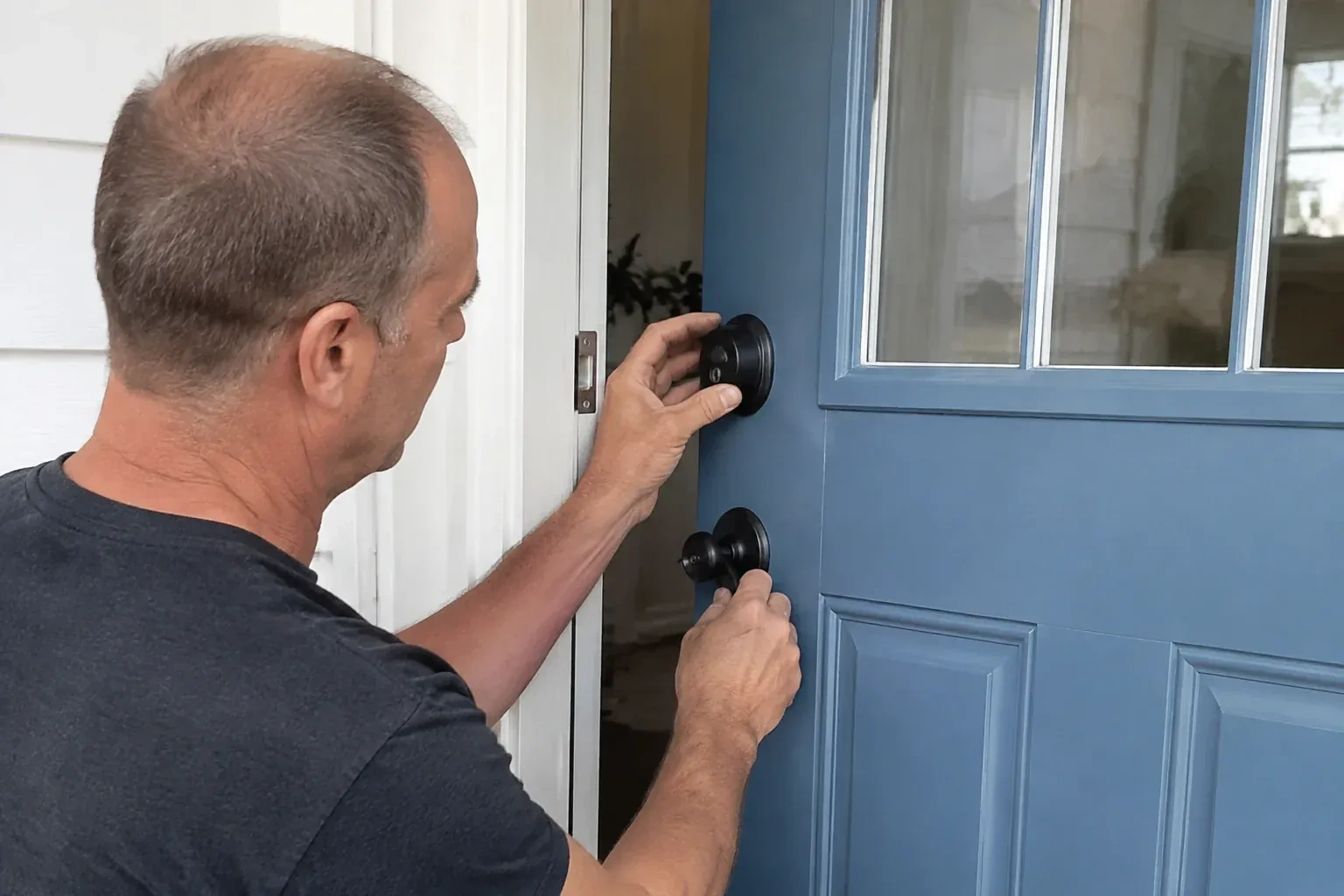
The front door has a handsome lever and a keyed knob, and that is all.
In plain words
Steel-clad and fibreglass doors, the common insulated entry doors in newer subdivisions, take a deadbolt happily as long as they are cut for it properly. The skin is thin metal or resin over a foam core, often with a wood block at lock height, so the cross bore is made with a hole saw suited to the skin, at low speed, and the edge is finished with a plate rather than a chisel mortise. Solid wood doors in older homes are cut conventionally, with care for splitting at the edge. The locksmith reads the door before drilling and picks the method that leaves a clean opening and a true-running bolt.
How the visit goesYou bought a keypad deadbolt online and pulled the old one off, only to find the hole in the door is a different size and the bolt latch sits at a backset the new kit does not list. The door is now open and the box is on the counter.
Deadbolt Installation
How the visit goes
How the door hangs and closes
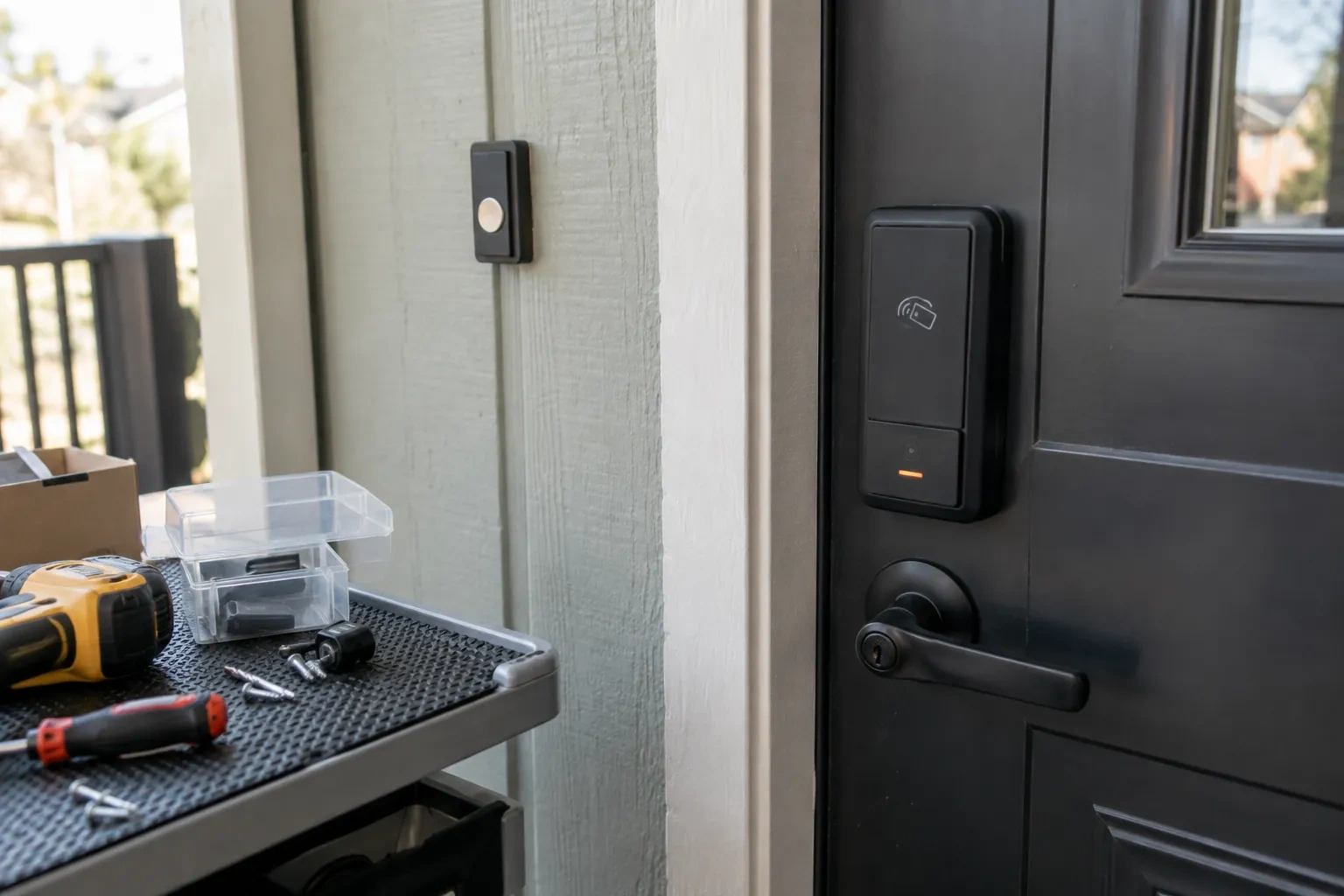
Before a new bolt goes in, the door has to close properly on its own, so the locksmith swings it a few times and watches. A door that drops on tired hinges, binds against thick weatherstrip or has to be pulled to latch will put a new deadbolt out of line the moment the season changes. Hinge screws are tested for grip, the gap around the door is read for evenness, and the existing latch is checked against its strike. Small corrections here, such as a longer hinge screw into the framing or a trimmed weatherstrip, are made first so the deadbolt can be set to a door that sits square and stays there.
Working on a steel-clad or fibreglass door
Insulated doors are cut with the skin in mind. A hole saw with fine teeth is run at low speed through the metal face, with the jig doing the steering so the saw does not skate on the smooth surface, and the cut is finished from the second face to keep both skins clean. Swarf is vacuumed out of the core so it cannot work into the bolt. The edge is usually a wood or composite stile inside a folded metal lip, and the bolt is finished with a drive-in collar or a plate screwed into the stile rather than a chiselled mortise. Fibreglass is scored first so the skin does not chip, then cut the same way.
A frame that now holds the bolt
Behind the new strike plate is the part of the job you cannot see and will never need to think about. The pocket has been bored deep enough for the bolt to seat fully, the plate has been let into the jamb so it sits flush, and the long screws reach through the jamb into the framing behind it. On a door that had been forced or had stripped screw holes, a full-length reinforcer may sit under the strike. If you press the jamb with your palm now, it does not flex. That stiffness is what a bolt needs to do its work, and it is the reason the installation took as long on the frame as on the door.
Deadbolt Installation
In the van
Boring jig and 54 mm hole saw
75 mm (3 in) strike screws
Single-cylinder deadbolt
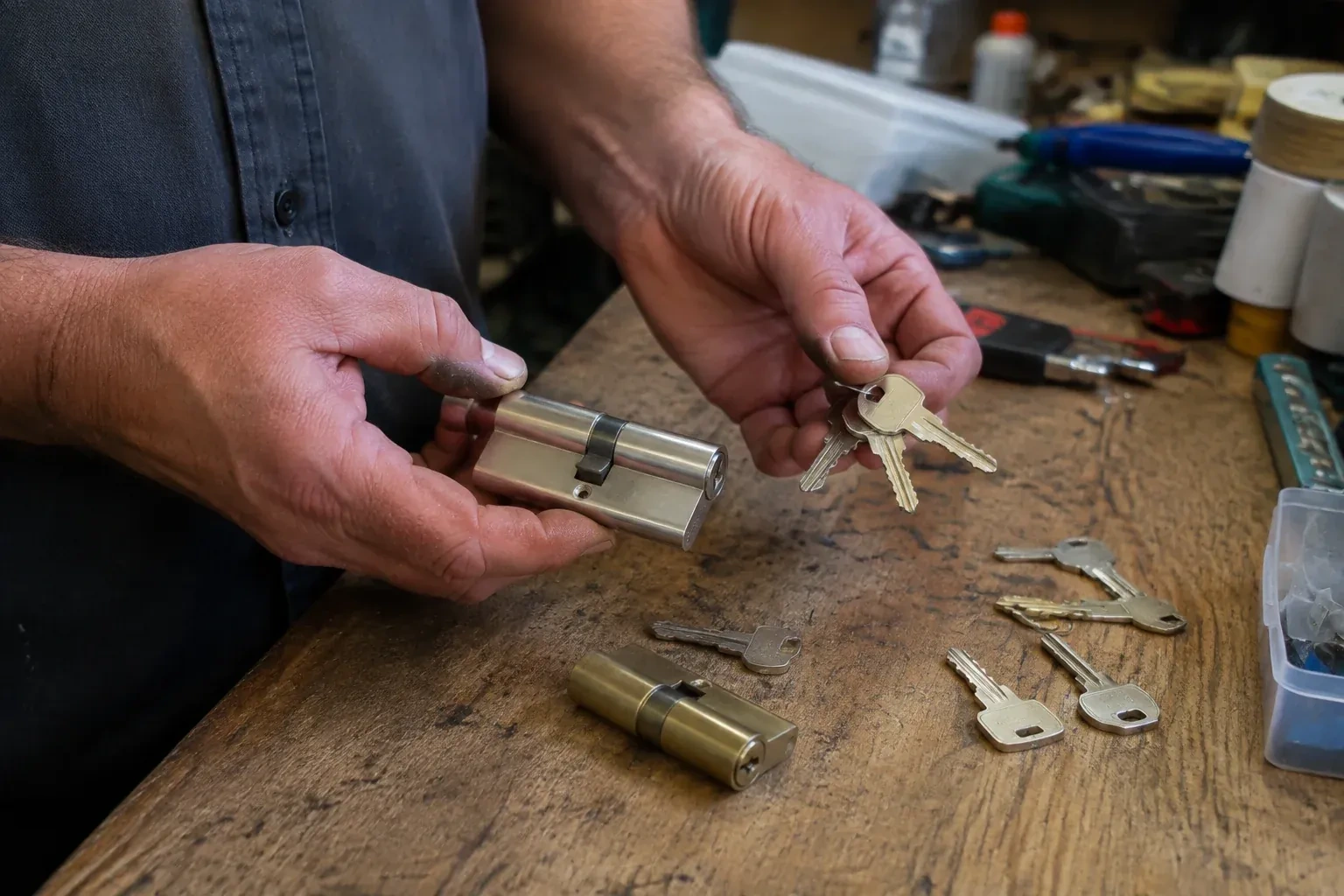
Rekeying pins and key blanks
Dry PTFE lubricant
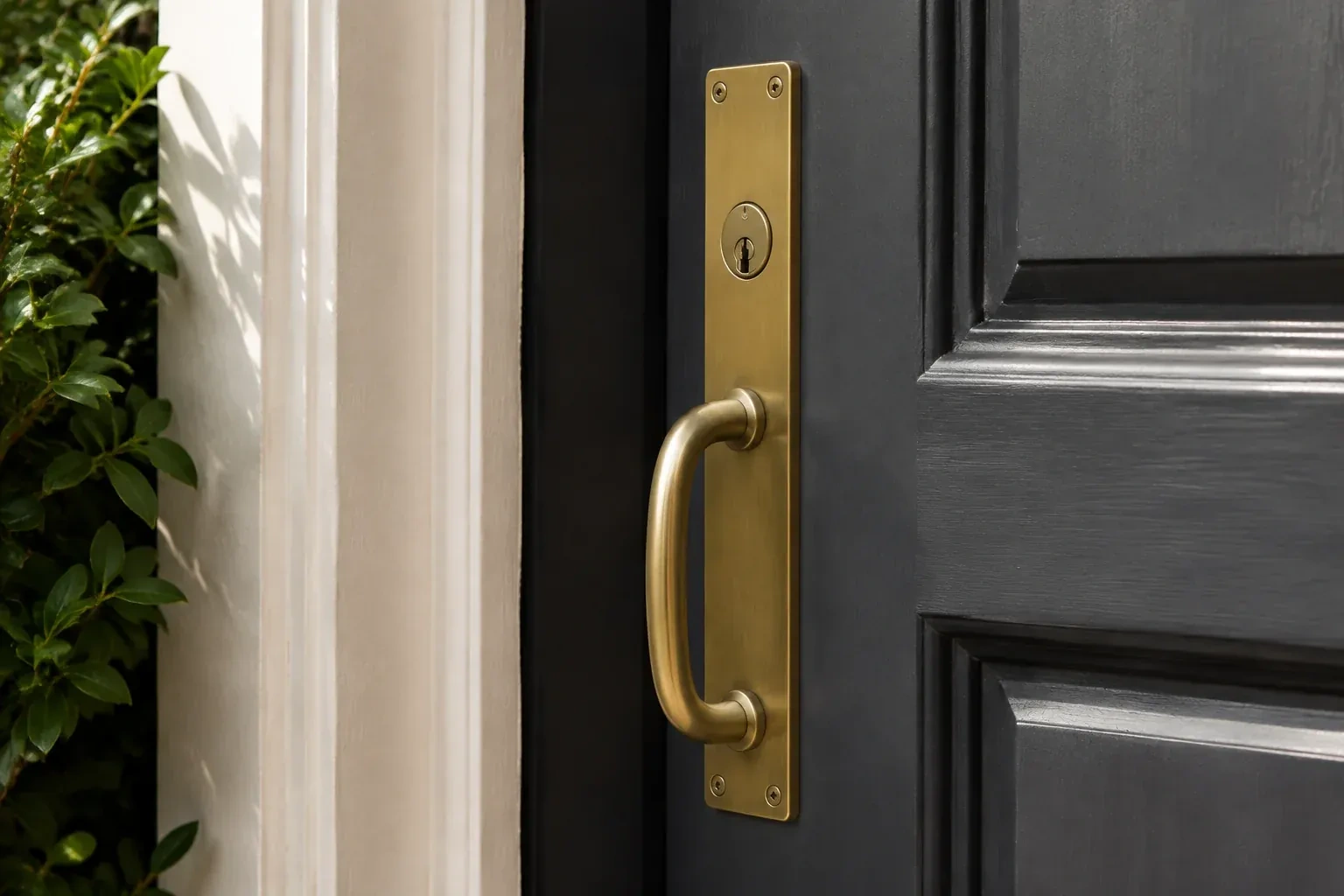
Deadbolt Installation
What affects the quote
Glass near the lock
A captive thumb-turn, laminated glass, security film or a relocated bolt height each carry their own cost, and the choice you make about glass shapes that part of the quote.
Grade and type of deadbolt
A builder-grade bolt, a residential model with a high security grade, and a heavy commercial-pattern deadbolt sit at different points in the hardware part of the quote, and the locksmith explains the differences.
Non-standard bore or backset
Older doors with a small cross bore, an unusual backset or a mortise lock case need adapting or filling before a modern deadbolt fits, and that preparation is quoted before work begins.
What to have ready
- Does anyone in the household have trouble with small knobs or stiff thumb-turns?
- Is there glass in the door or a sidelight beside it within arm's reach of the lock?
- Which doors do you want a deadbolt on, and does each one already have a bolt or only a knob?
Deadbolt Installation: questions
QuestionsSomeone forced my door. Can the new deadbolt go into the same frame?
In most cases, yes. The locksmith examines the jamb for splits and stripped screw holes, glues and pins any cracked section, and fits a full-length jamb reinforcer under the strike so the new long screws bite into sound wood and the stud behind. A new pocket is bored to the correct depth. Where the jamb is beyond repair, replacing that section of frame is discussed before any lock goes on.
Will drilling a new deadbolt damage my steel or fibreglass door?
Not when it is done for that door. Steel-clad doors are cut with a fine-toothed hole saw run slowly through the skin, guided by a jig so the saw cannot skate on the smooth face, and finished from both sides so each skin stays clean. Fibreglass is scored first so the surface does not chip. Shavings are vacuumed from the foam core, and the edge is finished with a collar or plate suited to the stile inside.
I just moved in. Should the new deadbolt be keyed to a new key?
It is a good moment for it. Nobody knows how many copies of a previous owner's key exist, so pinning the new bolt, and the rest of the exterior doors, to one fresh key retires all of them at once. Lock manufacturers list a move as one of the main reasons to rekey. You come away with a known number of keys, each tested in every door it is meant to open.
Related services
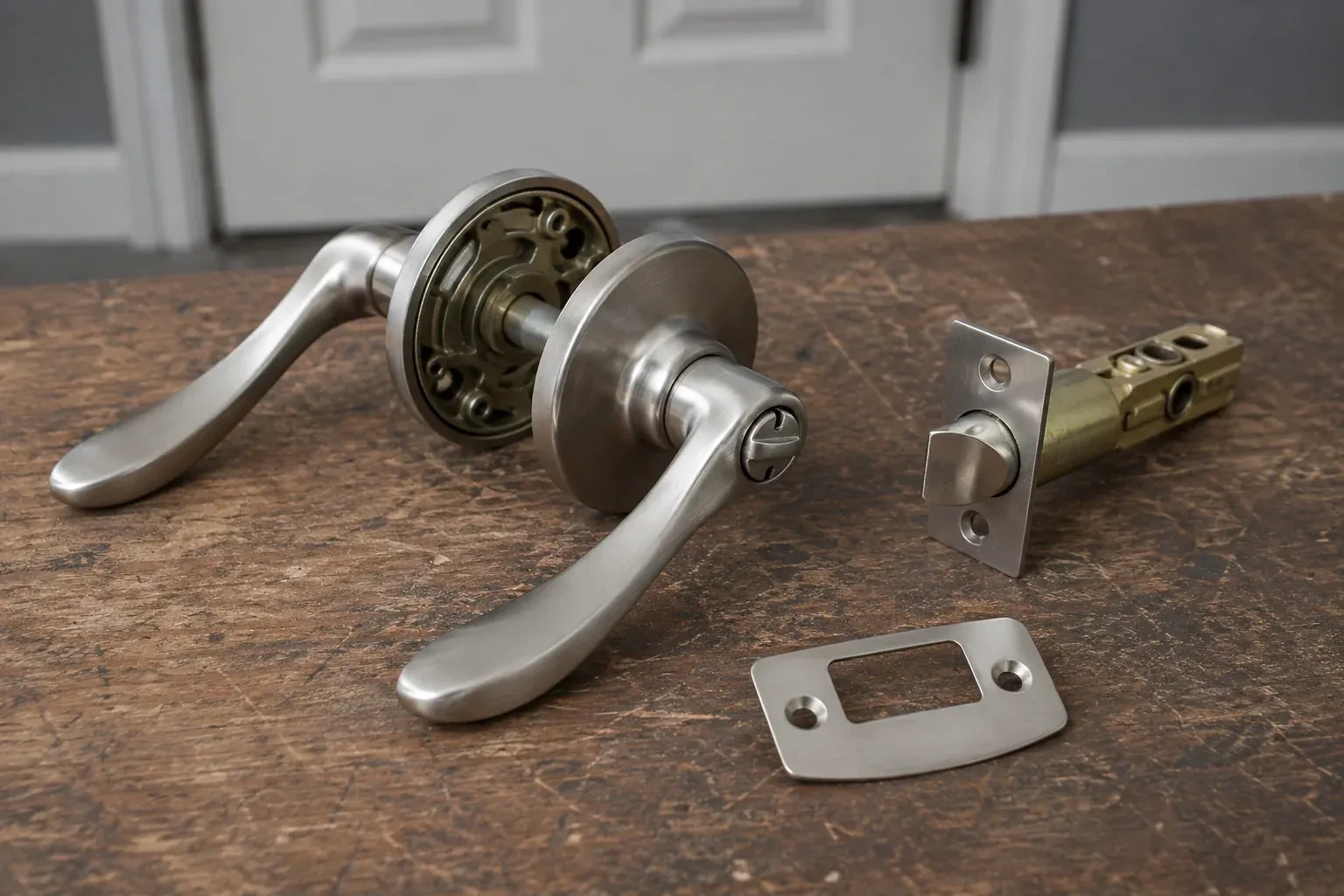
- Lock Replacement & UpgradeThe century home's original mortise lock takes a key the size of a spoon, sticks in humid weather and has worn its strike to a groove.
- Vintage Mortise Lock ServiceThe interior bedroom doors on the second floor have the original mortise latches, and none of them close any more.
- Smart Lock InstallationThe rental turns over every few months and each time you drive across town to swap keys, then wonder whether copies were made.