Car keys · Toronto
Vehicle Lock Repair
Every door drops into place together when the fob is pressed, except the driver's door, which stays unlocked while the rest click shut around it.
In plain words
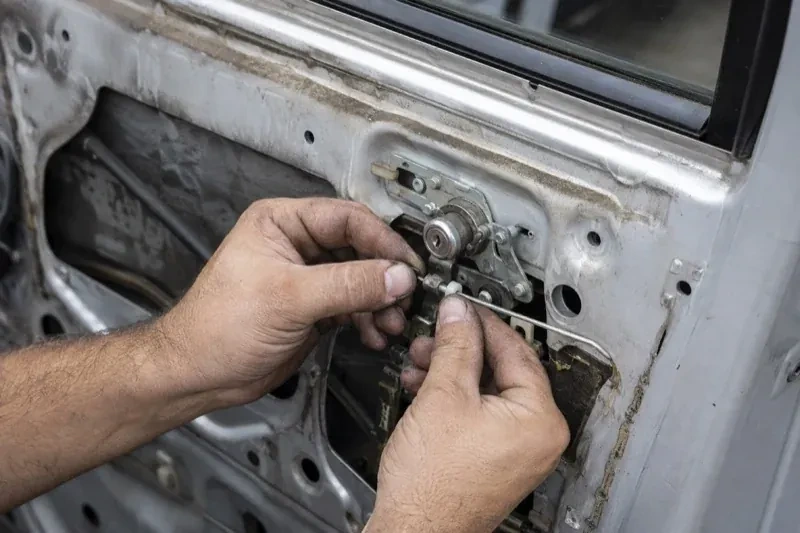
Vehicle Lock Repair addresses a single locking point, a door, the trunk or hatch, or a storage compartment, that has stopped behaving like the rest of the vehicle. After confirming the customer's connection to the vehicle against its registration, the locksmith opens the affected panel, tests the cylinder, the linkage and, where fitted, the power actuator, and traces the fault as far as it goes. Repair or replacement usually targets that part alone, though freeing a stuck mechanism can sometimes need a carrier plate, glass run guide or latch replaced alongside it; either way, the finish and the rest of the locking set carry on as they were.
How the visit goesYour key turns smoothly in the driver's door, the same as it always has, but the button underneath stays down and the latch never releases. The passenger side opens without any trouble, so the key itself is clearly not the source of the trouble.
Vehicle Lock Repair
How the visit goes
Checking the seal and the door's overall fit
Weatherstripping around the affected opening gets a look before the panel goes back on, because a perished or torn seal is often how moisture reached the parts that just failed. The locksmith also checks how the door or hatch sits in its frame, since a panel that has sagged slightly can put pressure on the latch and mimic a lock problem that is really a fit problem.
Reconnecting or replacing the linkage
A key that spins without opening the door often means the linkage rod has slipped off the cam at the back of the cylinder or has broken outright, though some cylinders are built to freewheel against the wrong key or a forcing tool, so the locksmith checks which applies first. The locksmith reaches the linkage through the trim panel, reseats or replaces the rod and its clip, and checks that a small amount of free play remains so the mechanism is not binding once the panel goes back on.
Keeping a spare key or fob somewhere useful
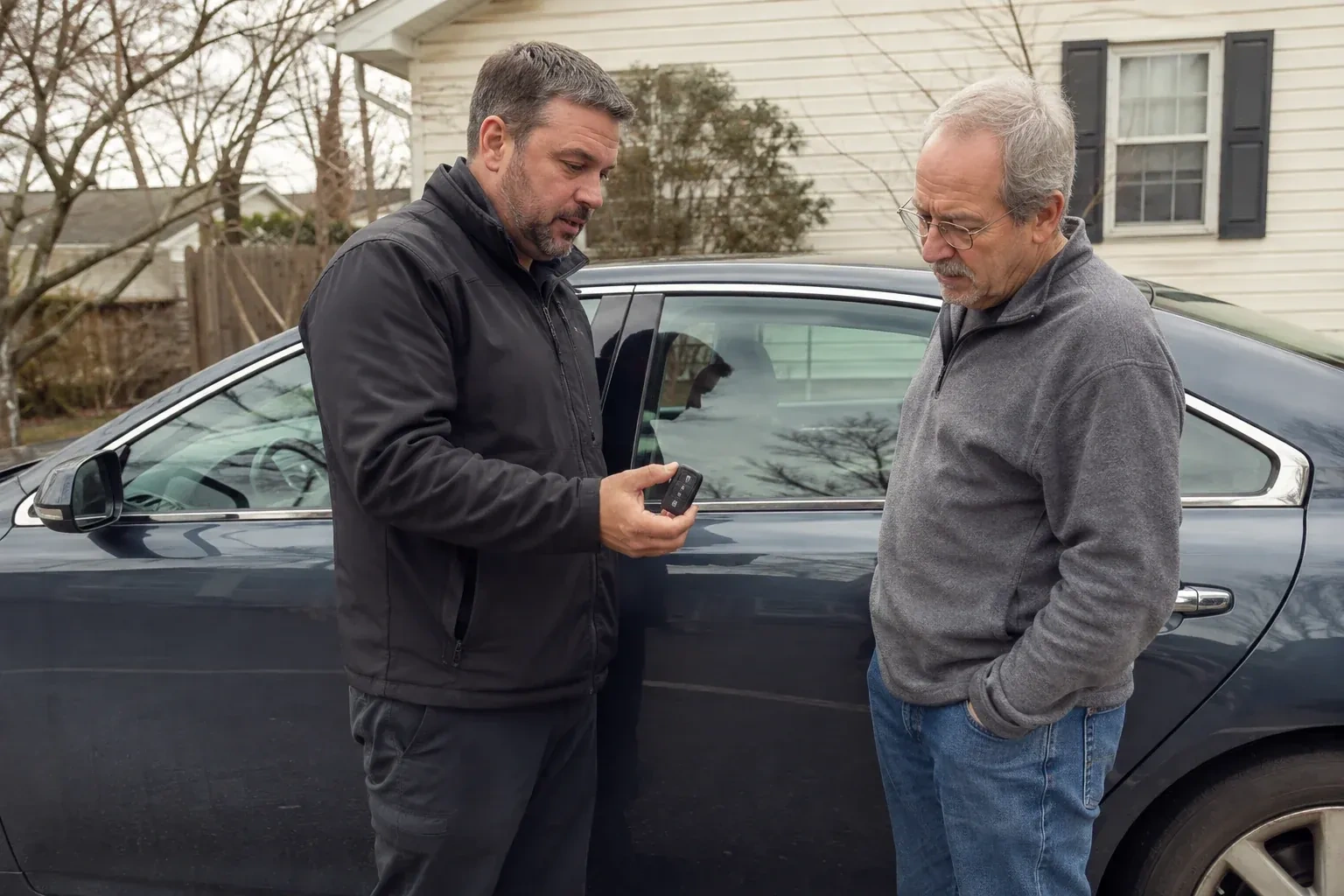
A repaired lock is a good moment to think about backup. A spare key kept somewhere other than inside the vehicle, or a second fob programmed for another driver in the household, means a future battery failure or a lost primary key is an inconvenience rather than a repeat of today's visit. The locksmith can cut or pair that spare while the vehicle's details are already on hand.
Vehicle Lock Repair
In the van
Replacement lock cylinder
Key blanks cut to code
Transponder chips
Trim panel removal tools
Linkage rods and clips
Vehicle Lock Repair
What affects the quote
Number of locks needing attention
One door behaving oddly is the simplest case. A vehicle with a driver's door, a trunk and a storage compartment all showing symptoms is a longer visit with more hardware to open and test.
Condition of the trim panel and clips
Interior panels and their retaining clips vary in how easily they come off and go back on without marking or breaking. Older or previously disturbed panels sometimes need extra care or replacement clips.
Damage from a previous repair attempt
A linkage bent by an earlier attempt, a scratched cylinder face, or trim clips already broken before the locksmith arrives may need repair or replacement in addition to the original fault, and this is pointed out before quoting.
What to have ready
- Do you have the vehicle's registration or ownership document on hand?
- Would you like a spare key or fob cut during the same visit?
- Has anyone already tried to force the key or pry at the door?
Vehicle Lock Repair: questions
QuestionsHow many keys or fobs will I leave with if mine gets replaced?
That depends on what you ask for. Most owners keep the original plus one spare, cut or paired at the same visit and tested in every lock on the vehicle so the household has a working backup from the start.
What causes a car door lock to seize up in winter?
Meltwater from a thaw can run into the keyway during the day and refreeze overnight, and road salt and brine thickens grease inside an older cylinder. Both make the key resist turning or stop partway, and both respond well to gentle warming or a lock de-icer rather than force.
The remote does not work on one door, but the key still does. What is going on?
This pattern usually points to the power lock actuator on that specific door rather than the mechanical lock, since the key path and the remote path use different components once they reach the door. The actuator, its wiring, or the connector near the hinge are the likely places to look.
Related services
- Car Key ReplacementThe engine cranks, catches for a second and dies, and a small key-shaped light keeps blinking on the dash.
- Spare Car Key DuplicationA teenager just passed a driving test and reasonably wants a key of their own rather than negotiating over the family's single copy every time the car is needed.
- Key Fob ProgrammingA new driver has joined the household, and the one existing fob is the only key anyone has ever had cut for this vehicle.