Commercial
Commercial Locks
Commercial work is measured by how little the business notices it. Doors keep opening for staff, keys stay accounted for, exits release cleanly and the manager knows who can go where. These pages describe how we bring a premises to that state.
Which one do I need?
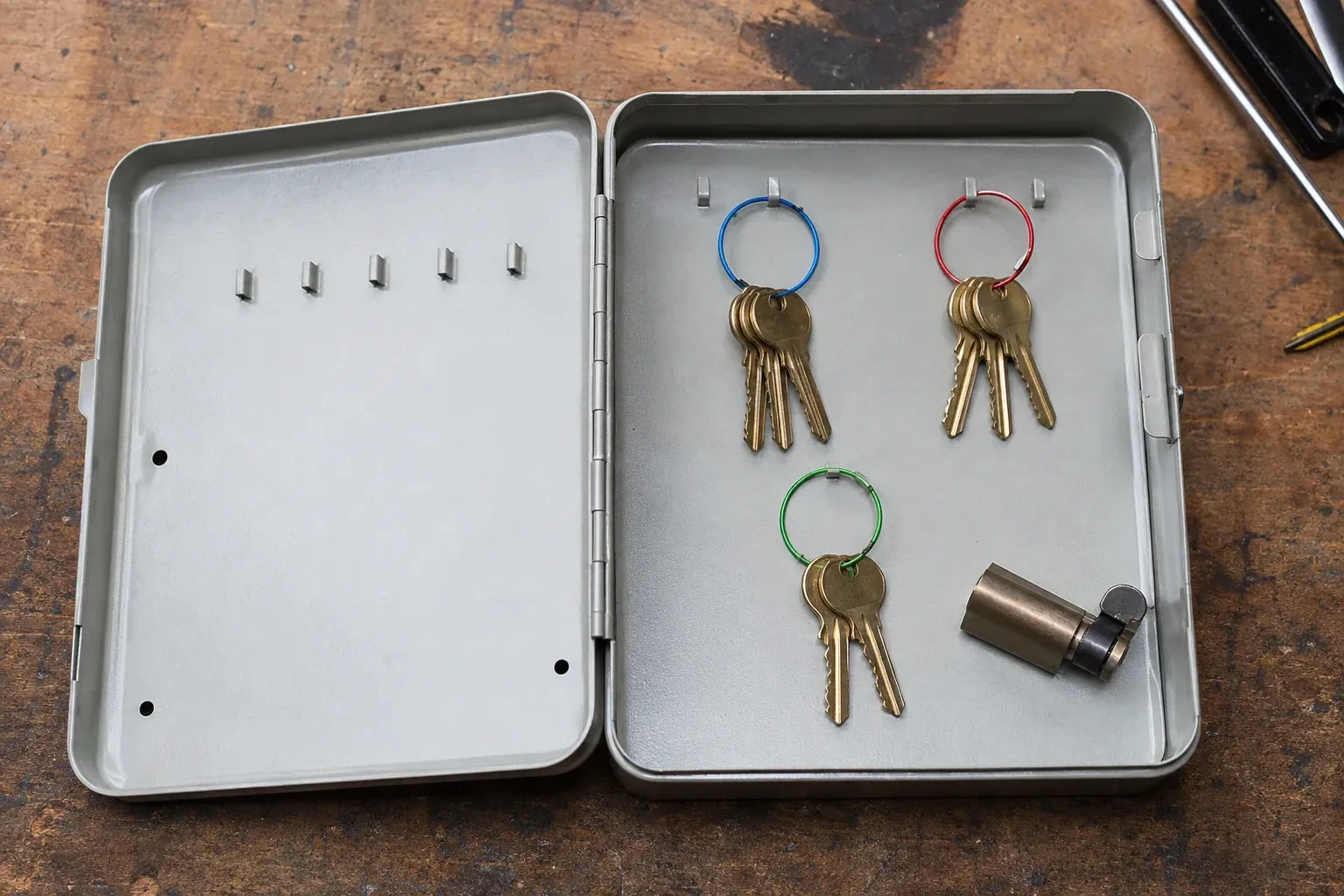
- The drawer behind the counter holds a tangle of keys with tape labels: front old, side, Dave.Commercial Rekeying
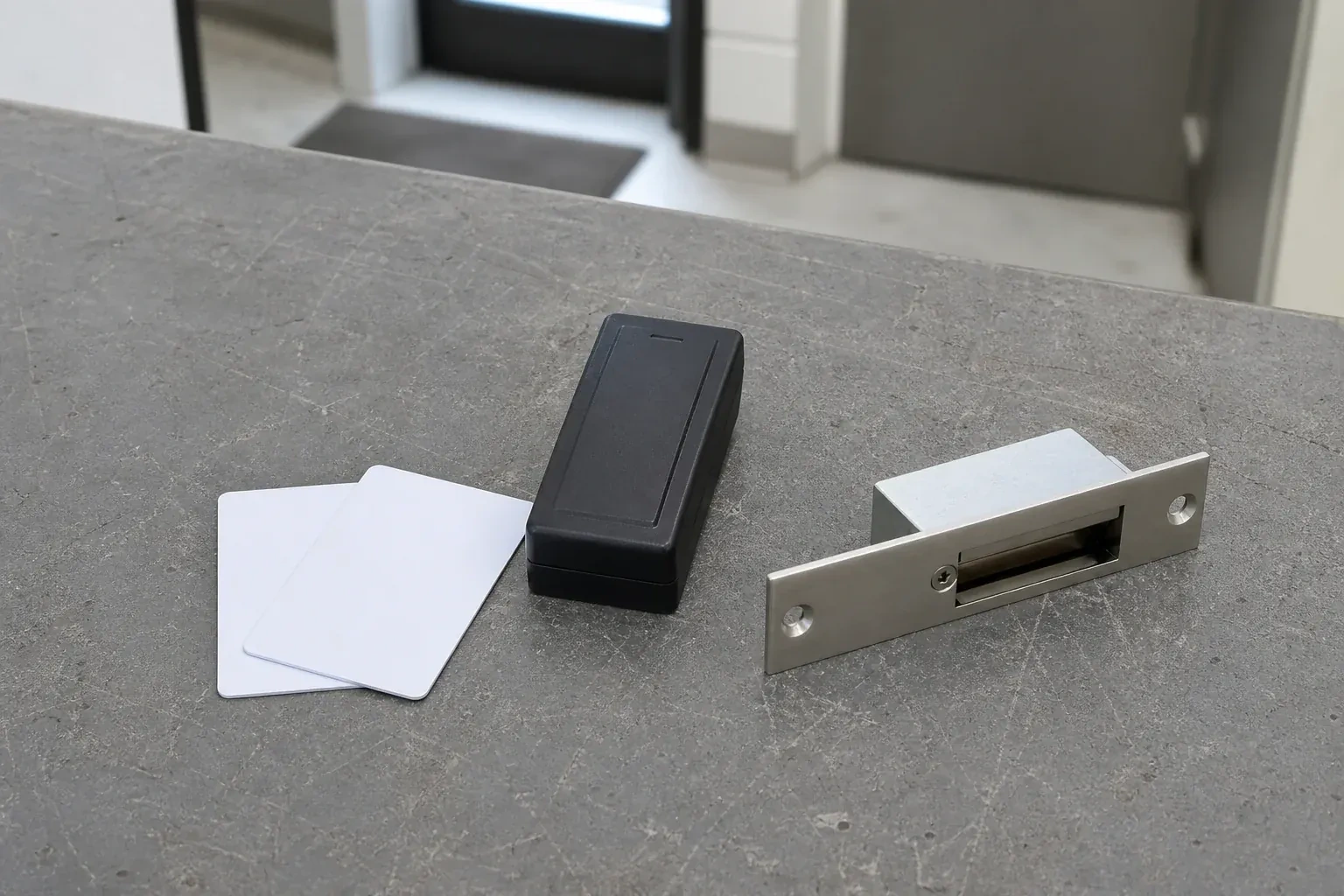
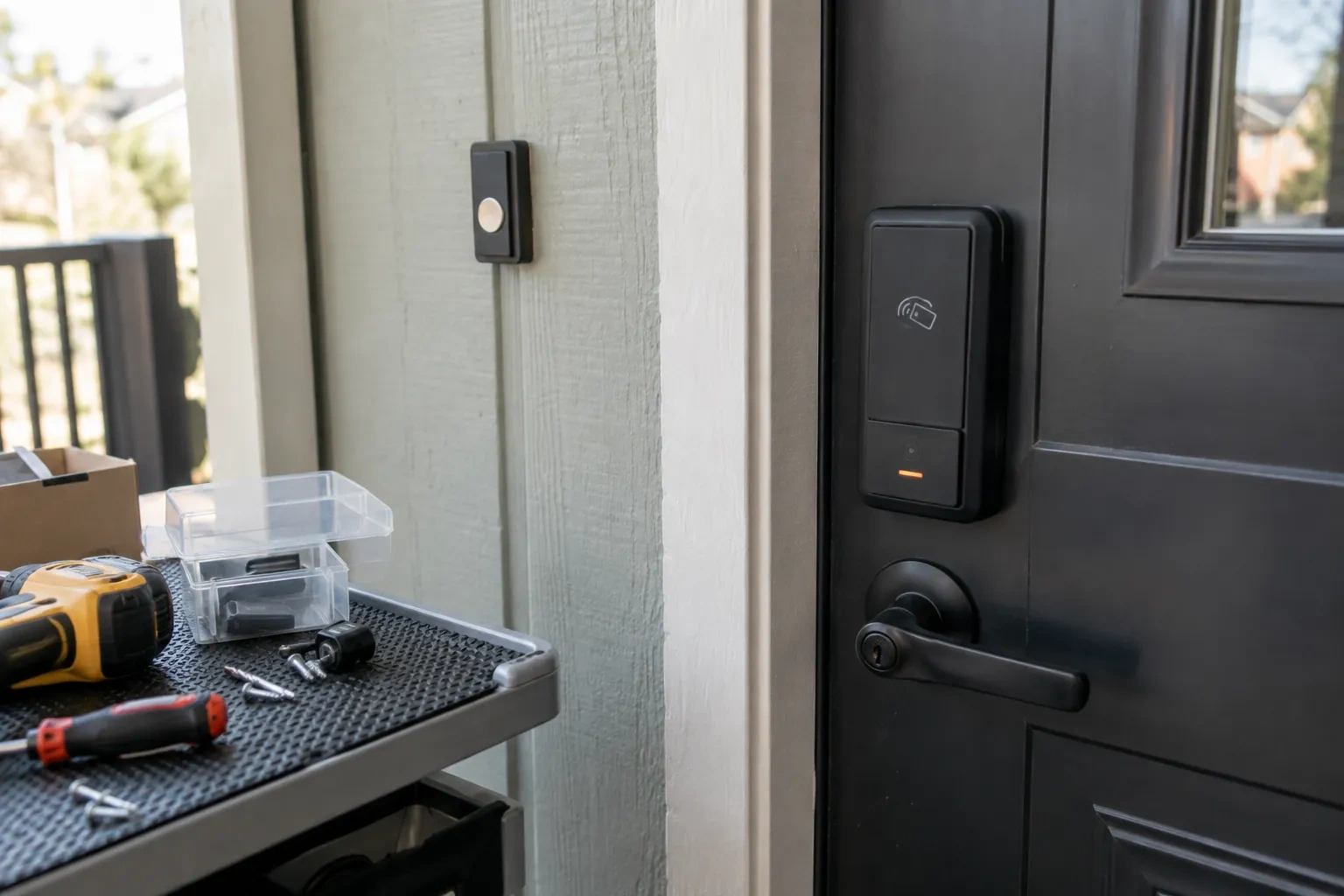
- A dental office wants the front desk to lock up at night without ever holding a key to the room where patient records and controlled supplies are stored.Master Key System Design
- The back door of the shop runs on one key, and by now it lives on six different rings: yours, two managers, a cleaner, a supplier who restocks early, and a keyholder nobody quite remembers approving.Access Control Installation
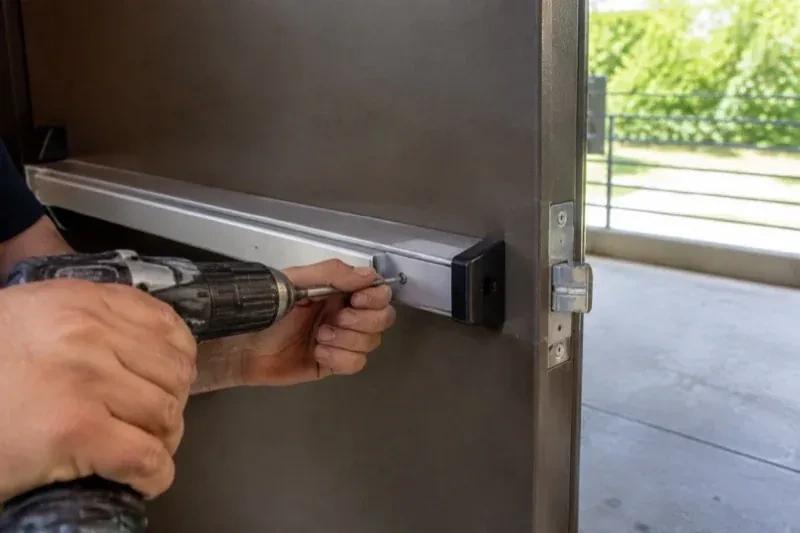
- The crossbar on the loading-dock door barely returns anymore.Panic & Exit Hardware
- An inspection report flagged the rear exit as needing hardware that opens with one motion and no key, and that door currently has an ordinary keyed knob on the inside.Commercial-Grade Lock Replacement
Commercial Locks
Locks for shops, offices and buildings: rekeying at turnover, commercial-grade hardware, exit devices, master key systems and access control.

Commercial Rekeying
The state of the cylinders and the doors
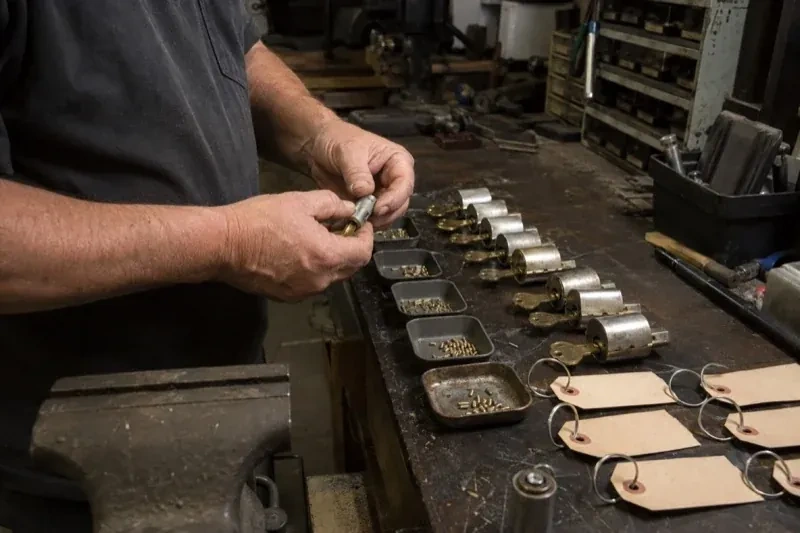
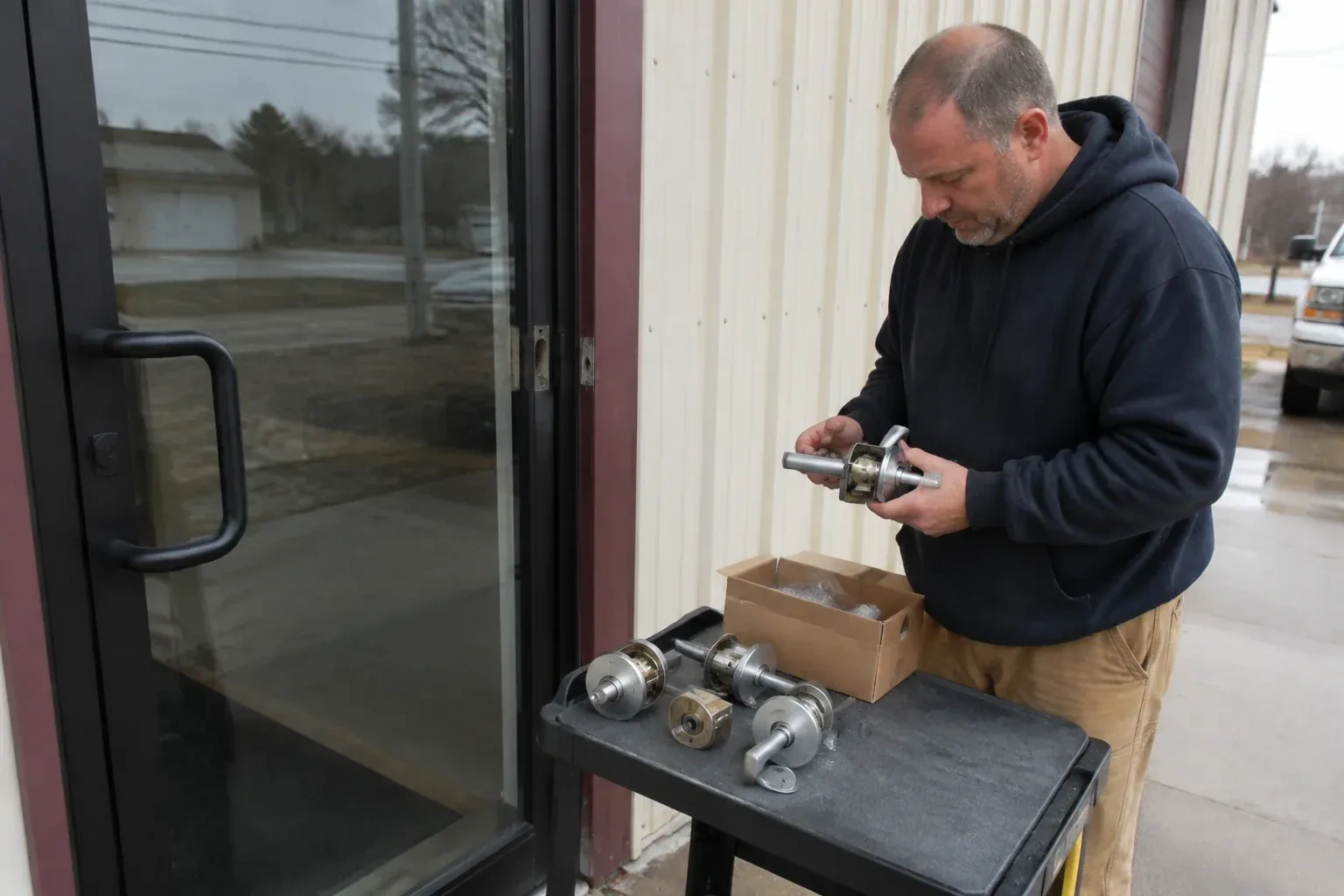
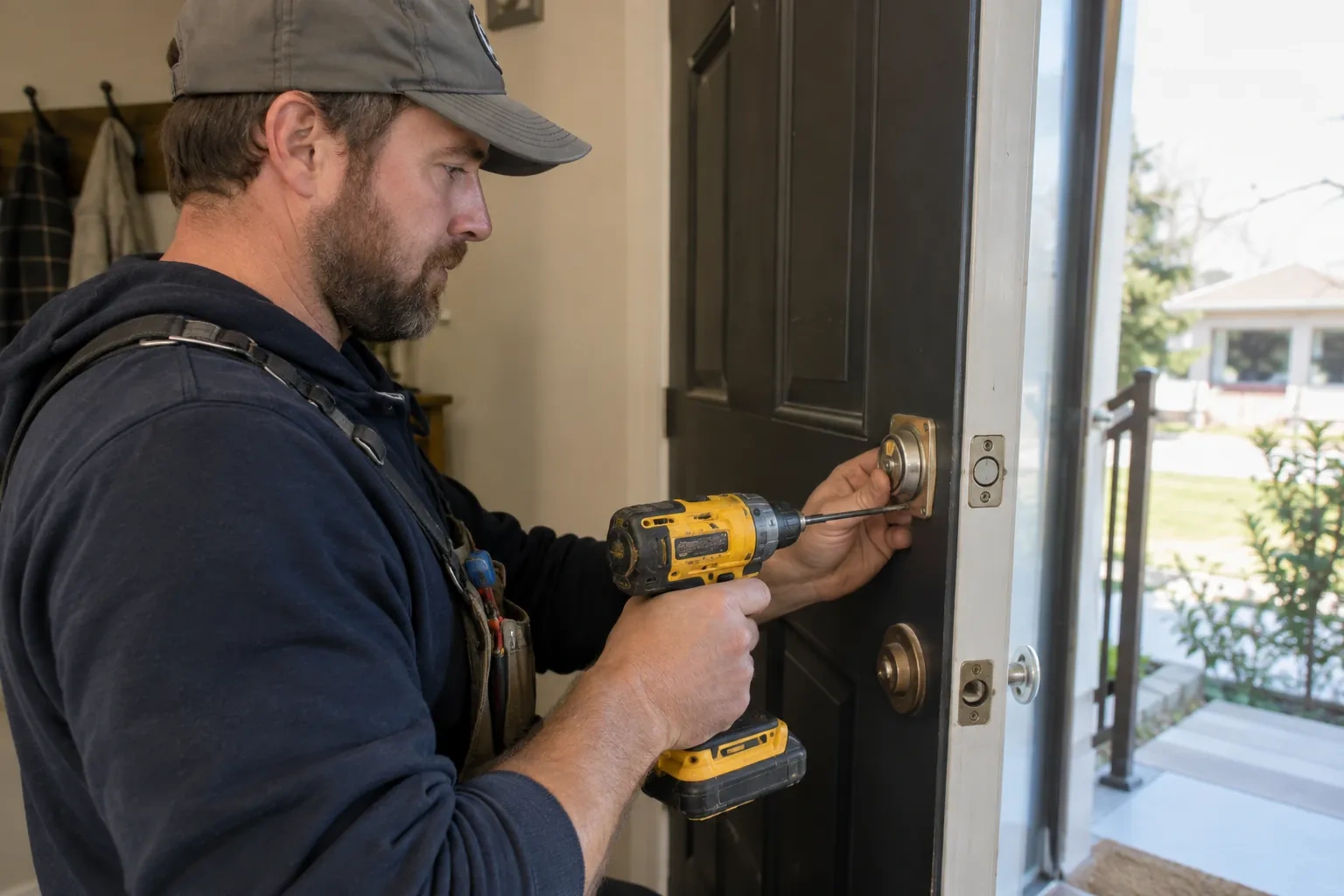
A cylinder about to be repinned is examined the way a mechanic looks over a part before rebuilding it. The plug should turn smoothly with the right key, the pins should spring back cleanly, and the face should be free of the green bloom that salt spray leaves on storefront hardware after a few winters. The locksmith also checks how the door closes: a strike that no longer lines up, a closer that slams, or a deadlatch that fails to catch will keep a freshly rekeyed door from locking properly.
Most cylinders pass and are repinned; a worn or corroded one is pointed out so you can choose a replacement for that opening.