Commercial · Toronto
Panic & Exit Hardware
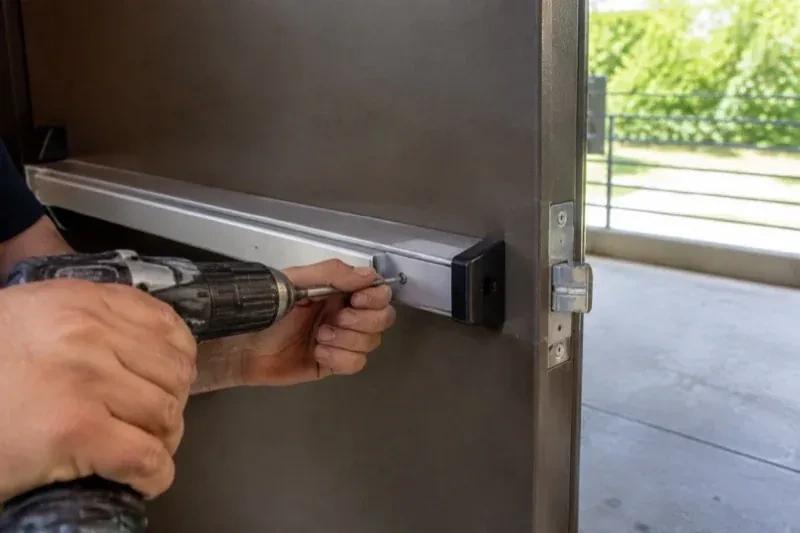
The crossbar on the loading-dock door barely returns anymore.
In plain words
The visit ends with a record, not just a working door. Every device fitted is logged with its type, its rating, the force and latch checks it passed, and who now holds the dogging key. That record is what a fire inspector, an insurer or a new property manager asks for later, and it is far easier to hand over on the day of installation than to reconstruct afterward from memory of what went on which door.
How the visit goesTwo doors used to swing as a pair at the community hall entrance, but one leaf has started closing before the other, catching the astragal and leaving a gap wide enough to worry the caretaker.
Panic & Exit Hardware
How the visit goes
Checking what is already fastened to the door
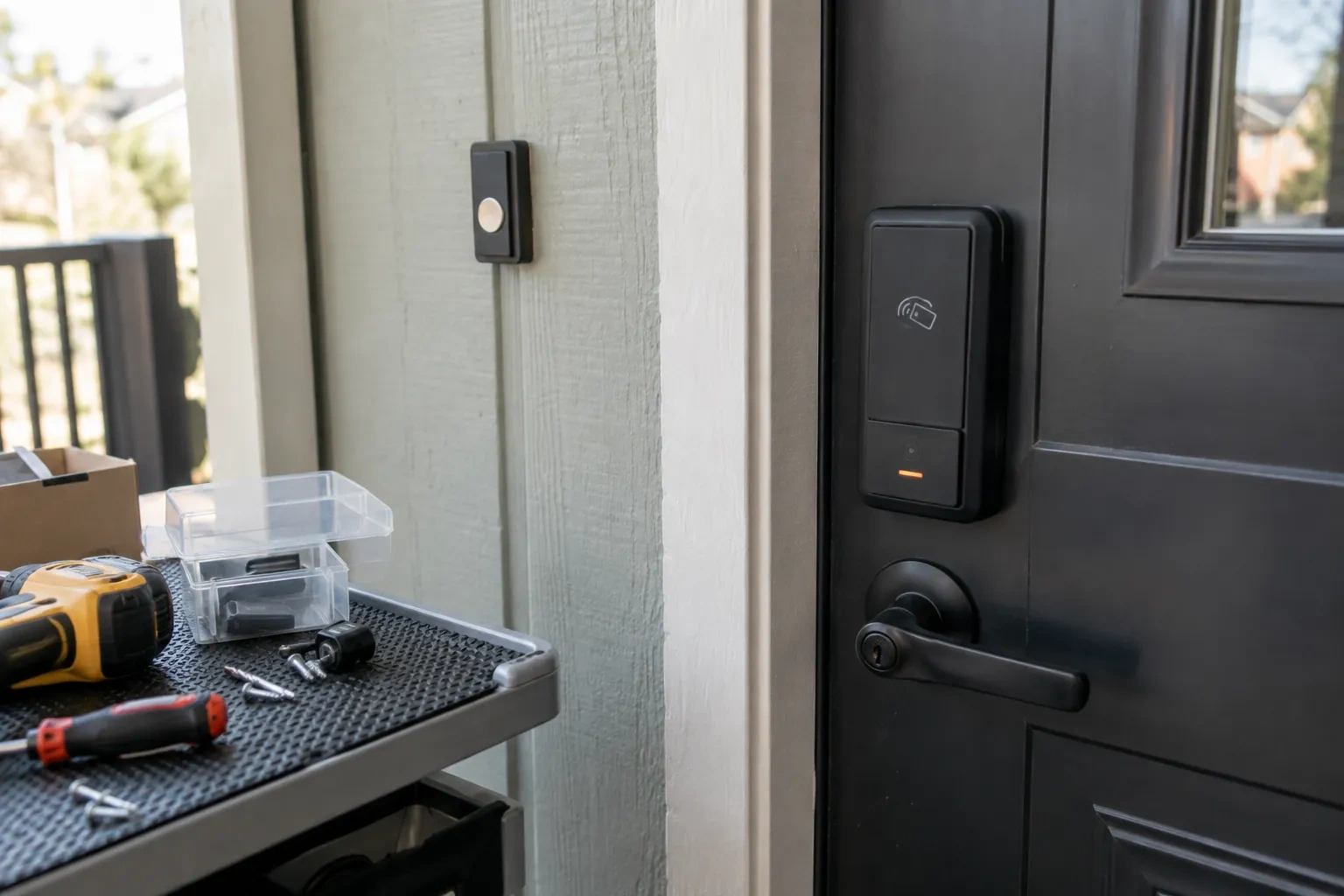
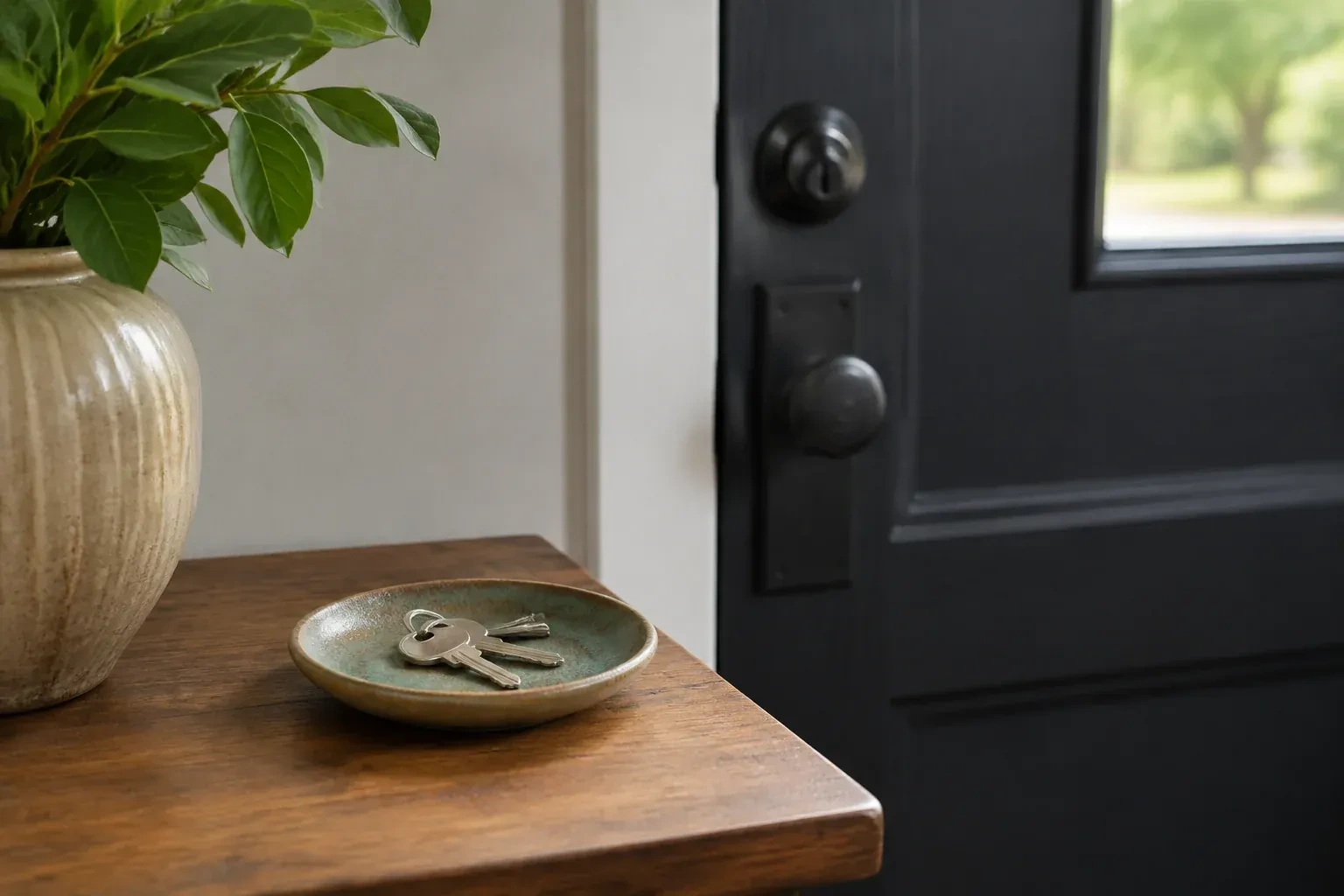
A surprising number of exit-hardware calls turn up a second lock nobody had mentioned: a hasp and padlock added for security, a slide bolt at the top of a rarely used door, or a deadbolt installed long after the original exit device. Each of these has to be understood before work starts, because an exit door can only be trusted to open under one motion if every fastening on it releases the same way. The locksmith notes what is there, explains what it means for the door's exit function, and works out with the owner what stays and what comes off.
Recording what was fitted
The visit closes with a written account of the work: which device went on which door, its type and rating, the outside trim fitted, any electrified function added, and the tests the assembly passed. This record travels with the building rather than staying in the locksmith's memory, so a fire inspector, an insurer or a new manager reviewing the space later has a clear account of the exit hardware and when it was fitted.
Staff who understand the dogging key
Whoever holds the dogging key or keyed dogging cylinder now knows what it does and, just as importantly, when not to use it: a door in a fire separation keeps its active latch at all times, so dogging belongs on openings where that restriction does not apply. Staff who prop doors for deliveries or busy periods have a legitimate tool for that instead of wedging the door with whatever is nearest, and the building keeps control over who can use it.
Panic & Exit Hardware
In the van
Rated exit device
Force gauge
Door closer
Dogging key or keyed cylinder
Request-to-exit switch
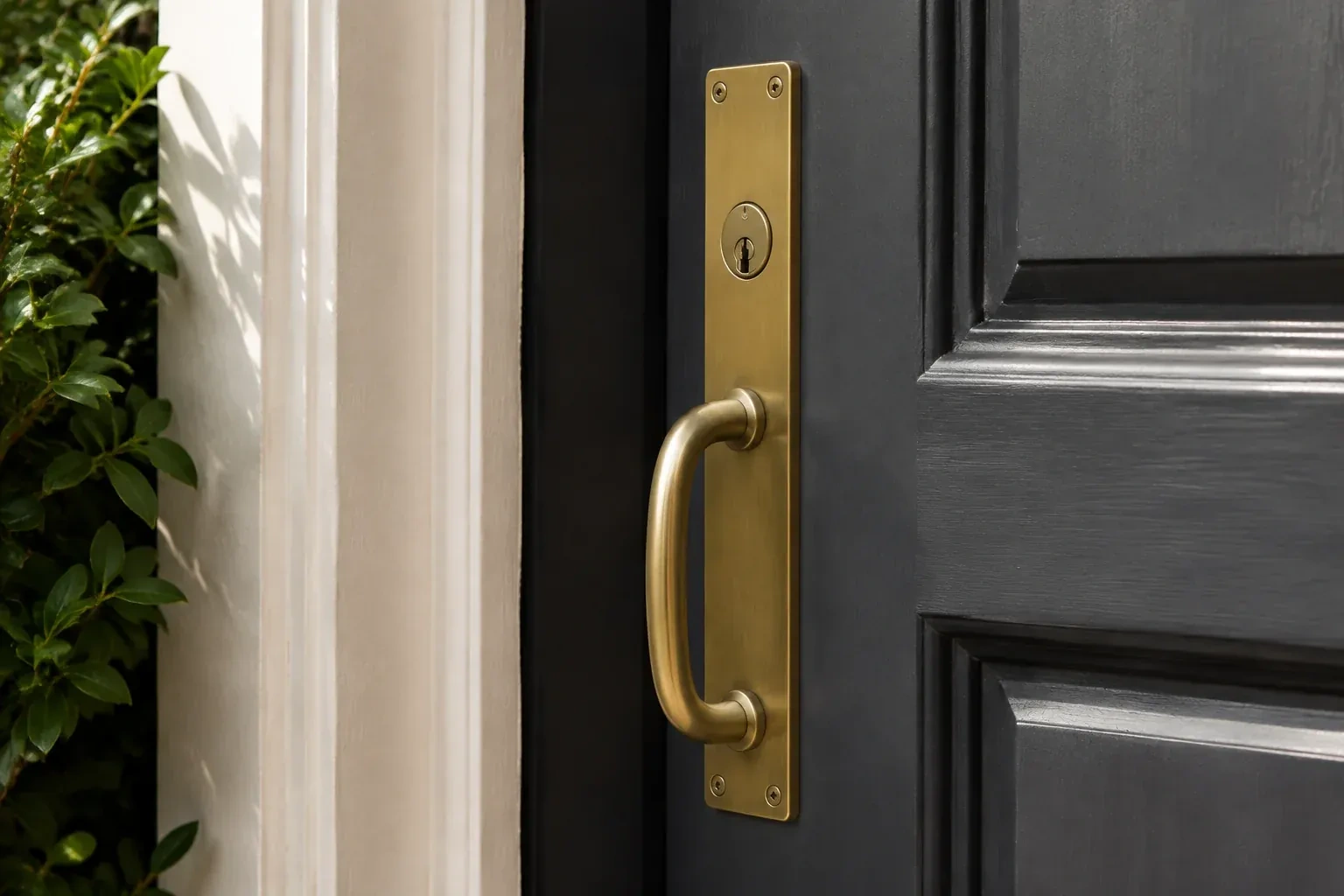
Panic & Exit Hardware
What affects the quote
Number of openings involved
One door with a single device is the simplest case. A building with several affected exits, such as doors from a stairway plus an assembly-room exit, is quoted as the sum of each opening's own work.
Door and frame condition
A door that has sagged, a frame that has shifted, or a strike pocket that no longer lines up needs correcting before hardware is fitted, which adds its own line to the quote.
Number of keys or dogging cylinders
Cutting keys for the outside trim and providing a dogging key or keyed dogging cylinder for the device is counted individually, the same way any keyed hardware is.
What to have ready
- What is the room's intended use and approximate occupant load?
- Which doors are involved, and are any of them fire-rated?
- Are any doors currently propped open during business hours?
Panic & Exit Hardware: questions
QuestionsHow high should the crossbar or touchpad be mounted?
Exit-device makers publish a mounting range for their own models, and in practice a crossbar or touchpad sits no higher than about 1200 mm above the finished floor. The locksmith sets the hardware inside the maker's range and below that ceiling, allowing for anyone in the space who needs a lower reach, a wheelchair user or a shorter staff member among them.
What if the existing device is old and no replacement part is available?
Where a specific replacement part cannot be sourced for an older device, the practical route is usually to replace the whole exit device with a current one built for the same door, rather than leave a partially working device in place. This is decided case by case once the existing hardware and door preparation have been examined, since the new device still has to suit the same opening.
Can a padlock or extra deadbolt stay on a door that has this hardware?
No additional fastening should stay on an exit door that does not release the same way the primary device does. A hasp, padlock or separate deadbolt added at some point for extra security is a common finding on an older door, and removing or replacing it with something that releases under the same push is part of bringing that opening back to a single, reliable exit.
Related services
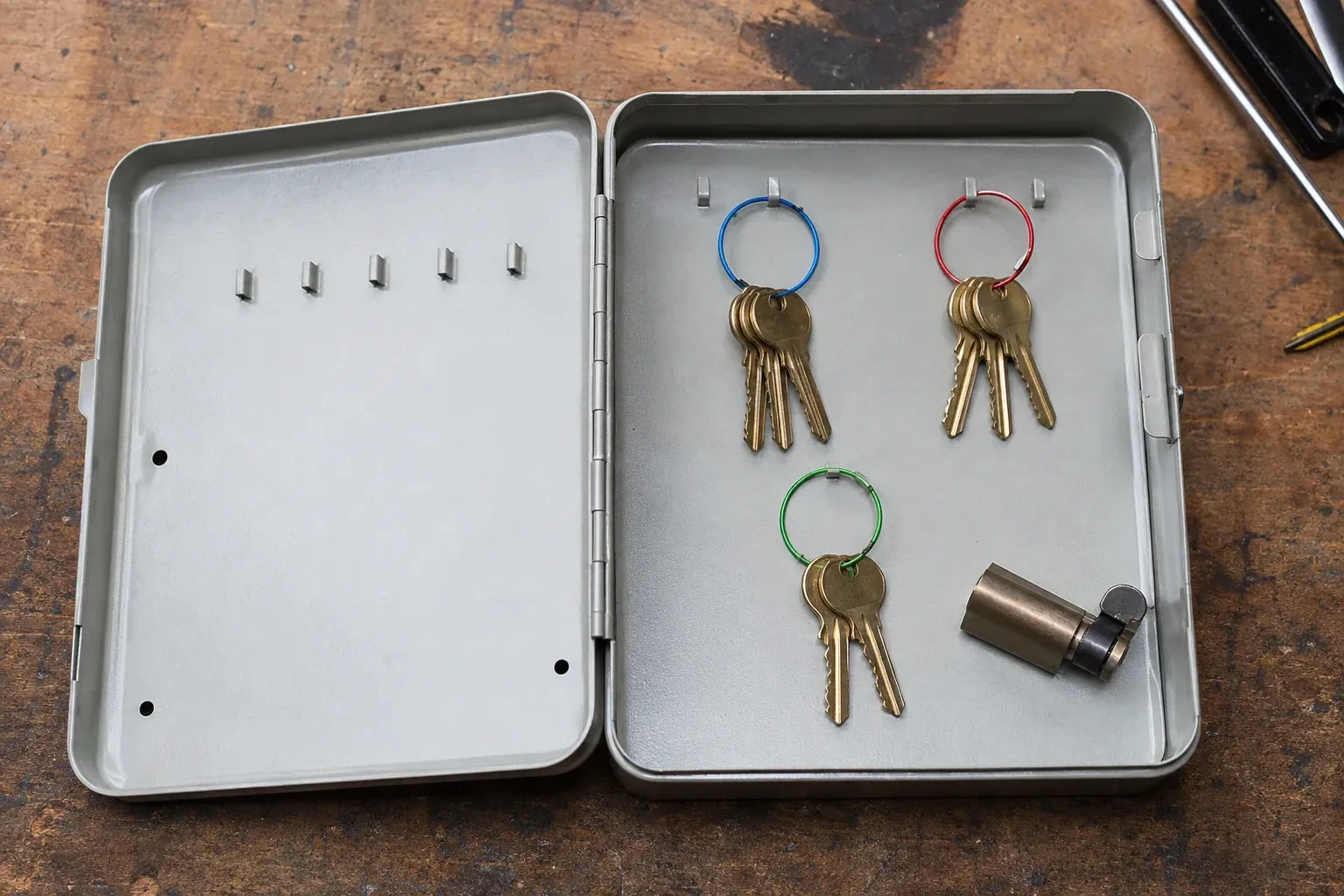
- Master Key System DesignA dental office wants the front desk to lock up at night without ever holding a key to the room where patient records and controlled supplies are stored.
- Access Control InstallationThe back door of the shop runs on one key, and by now it lives on six different rings: yours, two managers, a cleaner, a supplier who restocks early, and a keyholder nobody quite remembers approving.
- Commercial-Grade Lock ReplacementAn inspection report flagged the rear exit as needing hardware that opens with one motion and no key, and that door currently has an ordinary keyed knob on the inside.