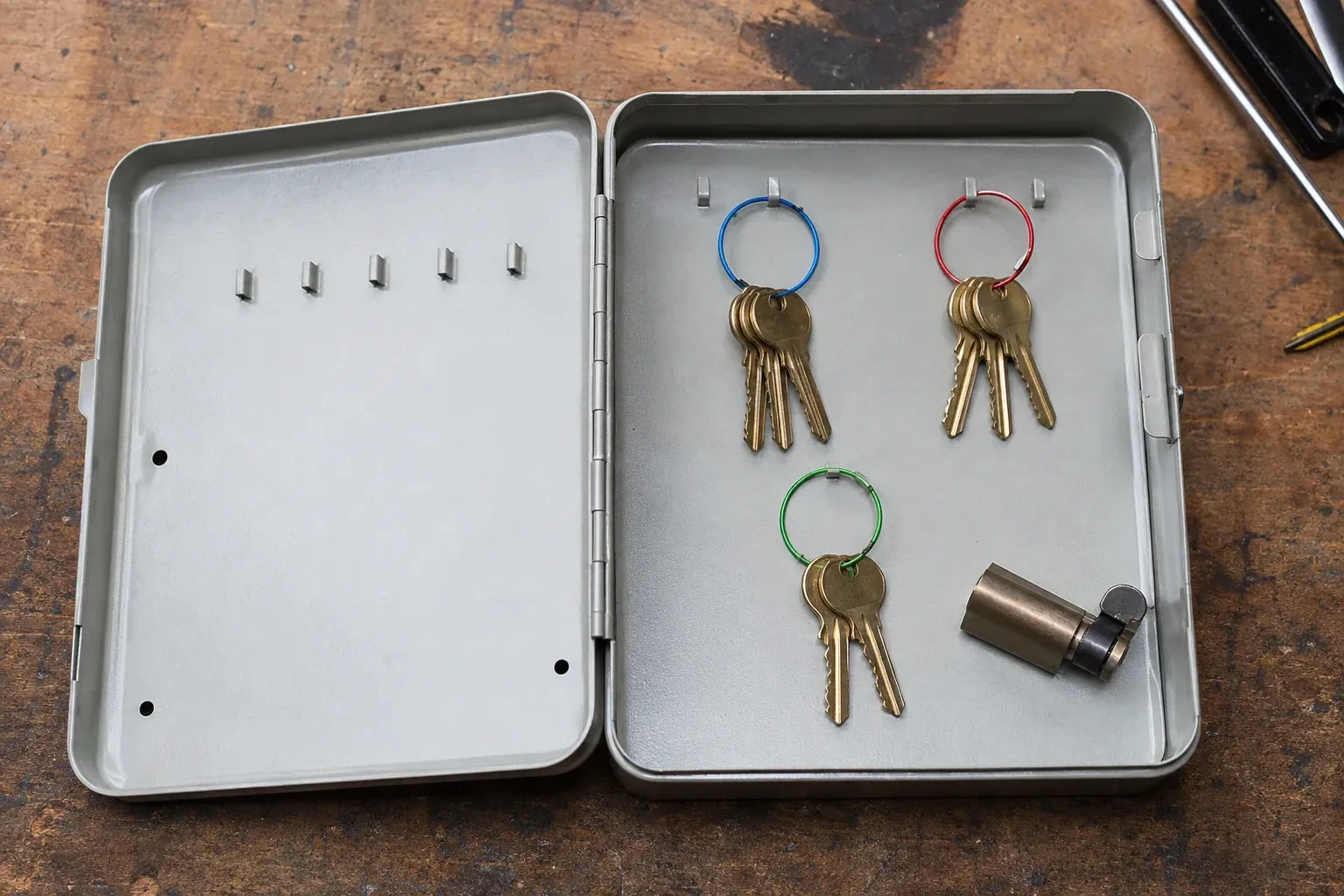

Commercial · Toronto
Master Key System Design
A dental office wants the front desk to lock up at night without ever holding a key to the room where patient records and controlled supplies are stored.
In plain words
A property that expects to add doors, departments or locations benefits from a master key system built with room to grow. Master key system design accounts for that from the outset: the keying platform and combinations chosen leave spare capacity for realistic future openings, rather than filling every available combination on the first day. That way, a new office, a new hire, or a newly leased unit can usually be added to the existing chart instead of triggering a redesign of levels that are already in use elsewhere in the building.
How the visit goesA dental office wants the front desk to lock up at night without ever holding a key to the room where patient records and controlled supplies are stored. Right now one master key opens both, which nobody is comfortable with once it is pointed out.
Master Key System Design
How the visit goes
Room to grow before it is needed
The assessment asks about plans the business already has in mind: a leased unit expected to fill, a department likely to split in two, a location due to open next year. Building spare capacity into the keying platform now is far simpler than adding a level to a system that is already fully pinned, which can mean touching cylinders that were never meant to change. This forward-looking check shapes which keying platform and how many reserved combinations the design settles on before any cylinder is committed to a specific level.
Bringing electronic and mechanical access into one plan
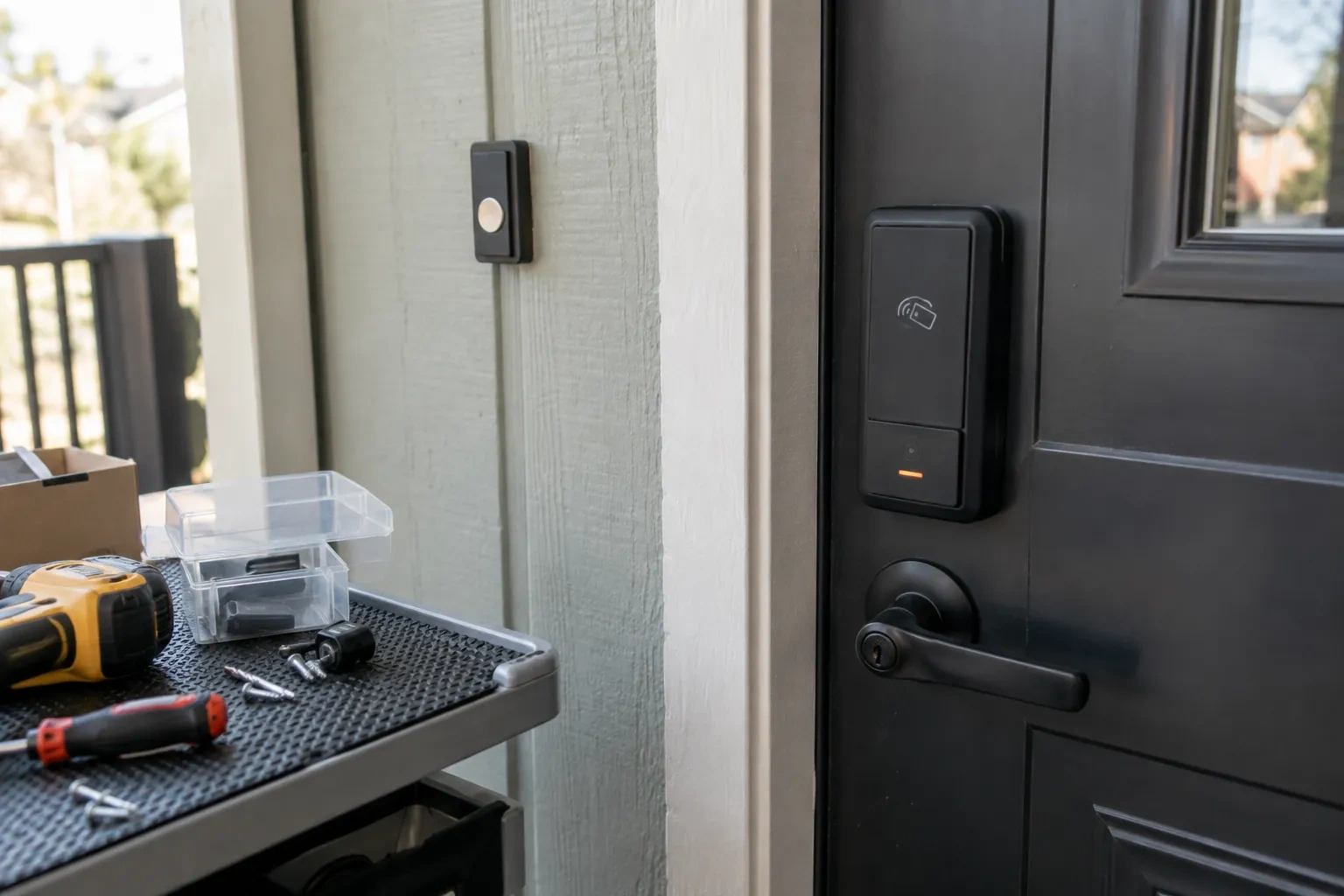
Where a property mixes mechanical cylinders with keypad or card-based doors, the mechanical hierarchy is designed to line up with the electronic access groups rather than run as a separate, unrelated system. A department that sits at one sub-master level on the mechanical side is kept at a matching level on any electronic doors it also uses, and any mechanical override cylinders behind an electronic lock are pinned into the same chart as every other door, so one document still describes the whole property.
Care that keeps the hierarchy intact
A little routine care keeps a master key system working the way it was designed. Cylinders should get whichever lubricant the cylinder maker actually recommends, since that varies by manufacturer and some rule out graphite while others call for a light oil, and a key that starts needing a wiggle is worth attention before it is forced or breaks off. None of this maintenance touches the pinning itself, so the hierarchy stays exactly as documented on the chart through years of ordinary use.
Master Key System Design
In the van
Keying chart
Compatible replacement cylinders
Key marking tools
Cylinder pinning kit
Change and master keys
Master Key System Design
What affects the quote
Condition of the property's current keys
A property with a reasonably current, if informal, sense of who holds which key gives the assessment a shorter starting point than one where keys have been copied and reissued for years with no record at all. More reconstruction work at the start affects the overall quote.
Any optional upgrade chosen along the way
Some businesses use the project as an opportunity to also upgrade a door closer, add a keypad to one entry, or reinforce a strike plate. None of this is required for the master key system itself, and each optional item is quoted as its own line.
Administrator training and handover time
Walking the named administrator through the chart, the issuance process and how to handle a future lost key or new hire takes a defined amount of time on the day of handover, and a more detailed walkthrough for a larger, multi-level system takes longer than a simple one.
What to have ready
- Are any doors part of a shared or condominium-controlled building system?
- Is there an existing chart, or is this starting from scratch?
- Do any doors need restricted or patented keys for duplication control?
Master Key System Design: questions
QuestionsCan electronic locks be part of the same system as mechanical keys?
Yes. Where a property mixes keypad or card doors with mechanical cylinders, the access levels are designed to line up across both, so a department sitting at one sub-master level mechanically holds a matching level electronically. Mechanical override cylinders behind an electronic lock are pinned into the same chart as every other door, so one record still describes the whole property.
What is a master key system, in plain terms?
It is a set of keys arranged in levels rather than issued one at a time. An individual change key opens one door, or a small group of doors keyed alike. A sub-master opens a defined group of doors, such as everything on one floor. A single top-level master opens the whole set. The levels are designed around who actually needs each one, then cylinders are pinned to match, so the physical keys follow an organization's real structure instead of years of informal copying.
Do all the doors on my property need to be part of the master system?
No. Some doors, such as a private office or a room with a single regular user, can reasonably stay on their own key outside the hierarchy if there is no real benefit to including them. The assessment is partly about deciding which doors belong in the system and which are simpler left alone, rather than assuming every lock has to join.
Related services
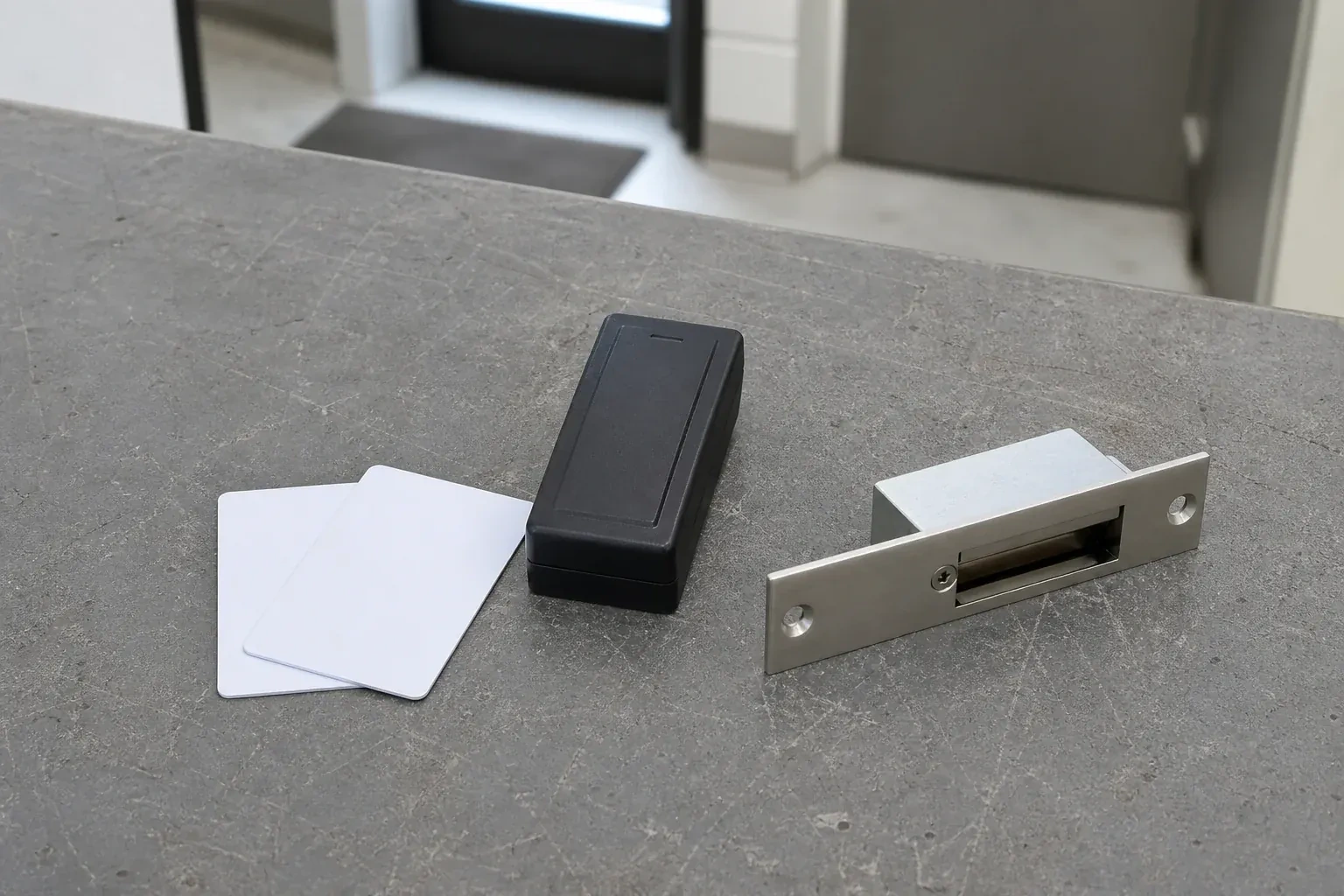
- Access Control InstallationThe back door of the shop runs on one key, and by now it lives on six different rings: yours, two managers, a cleaner, a supplier who restocks early, and a keyholder nobody quite remembers approving.
- Panic & Exit HardwareThe crossbar on the loading-dock door barely returns anymore.
- Commercial-Grade Lock ReplacementAn inspection report flagged the rear exit as needing hardware that opens with one motion and no key, and that door currently has an ordinary keyed knob on the inside.