Change or rekey · Toronto
Deadbolt Installation in Toronto
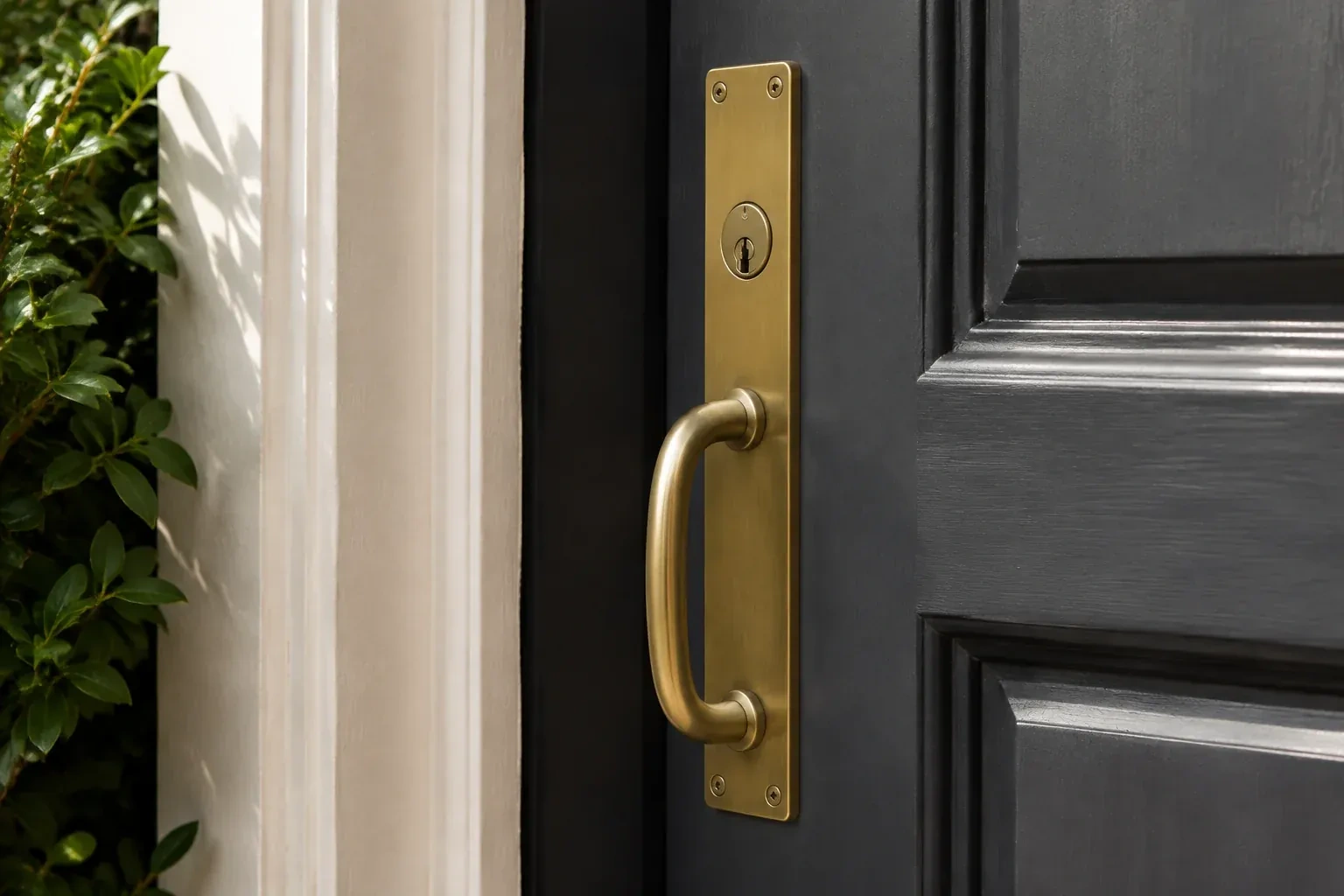
The front door has a handsome lever and a keyed knob, and that is all.
In plain words
For a main exit door the hardware choice has a safety side as well as a security side. A door people leave a home through should open from the inside without a key, so a single-cylinder deadbolt with an inside thumb-turn is the standard fit rather than a bolt keyed on both faces. Where glass sits close to the lock, the answer is a captive thumb-turn, laminated glass, or a tested security-film system with its specified frame attachment, not a key on the inside. The locksmith explains the trade-offs, fits the lock that keeps a stranger out and the family able to leave, and shows everyone the thumb-turn.
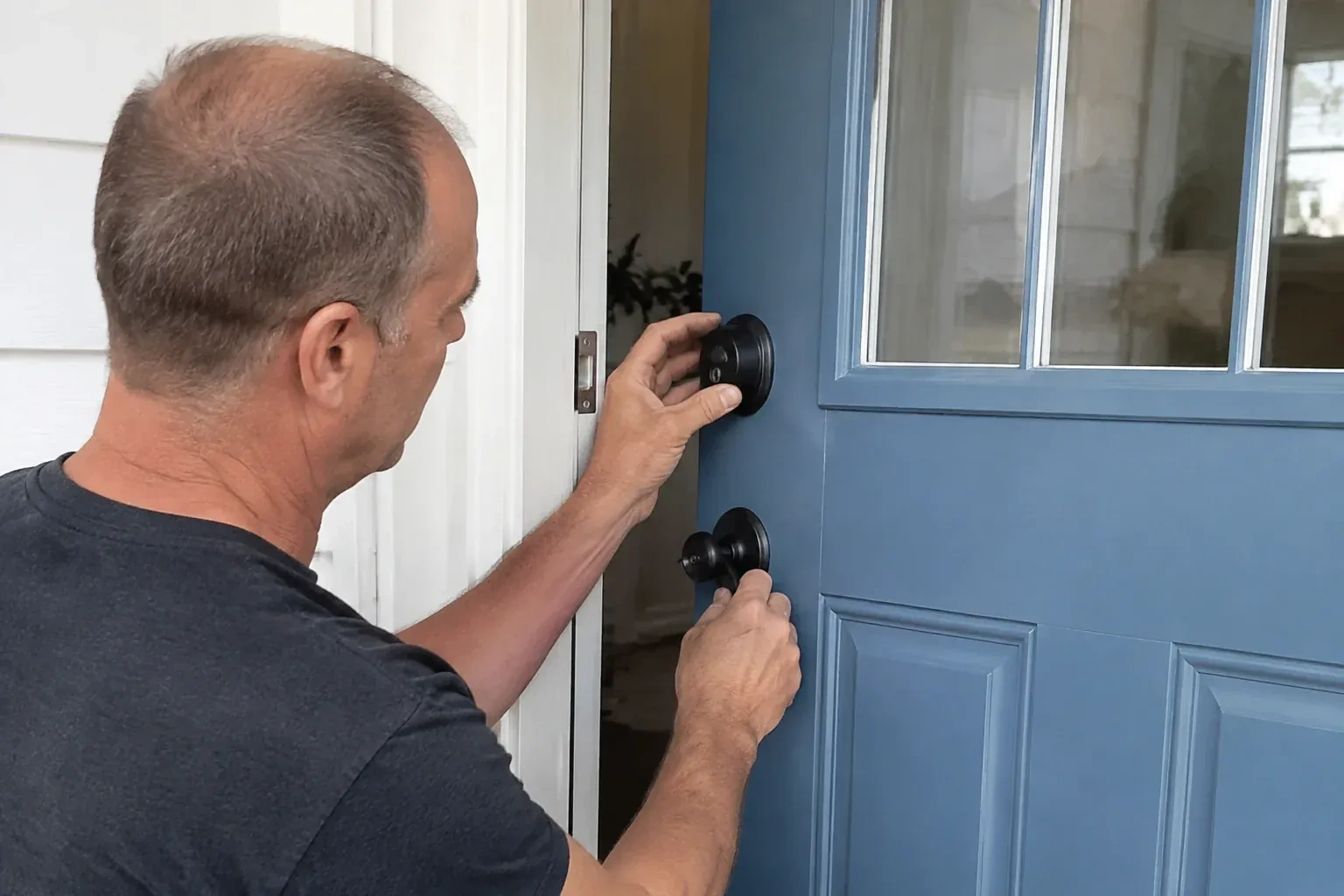
How the visit goesYou moved in three weeks ago. The previous owner left a handful of keys, none labelled, and the bolt on the side door rattles in its housing. You would like every exterior door to bolt, and to know exactly who can open it.
Deadbolt Installation
How the visit goes
Which key should open it
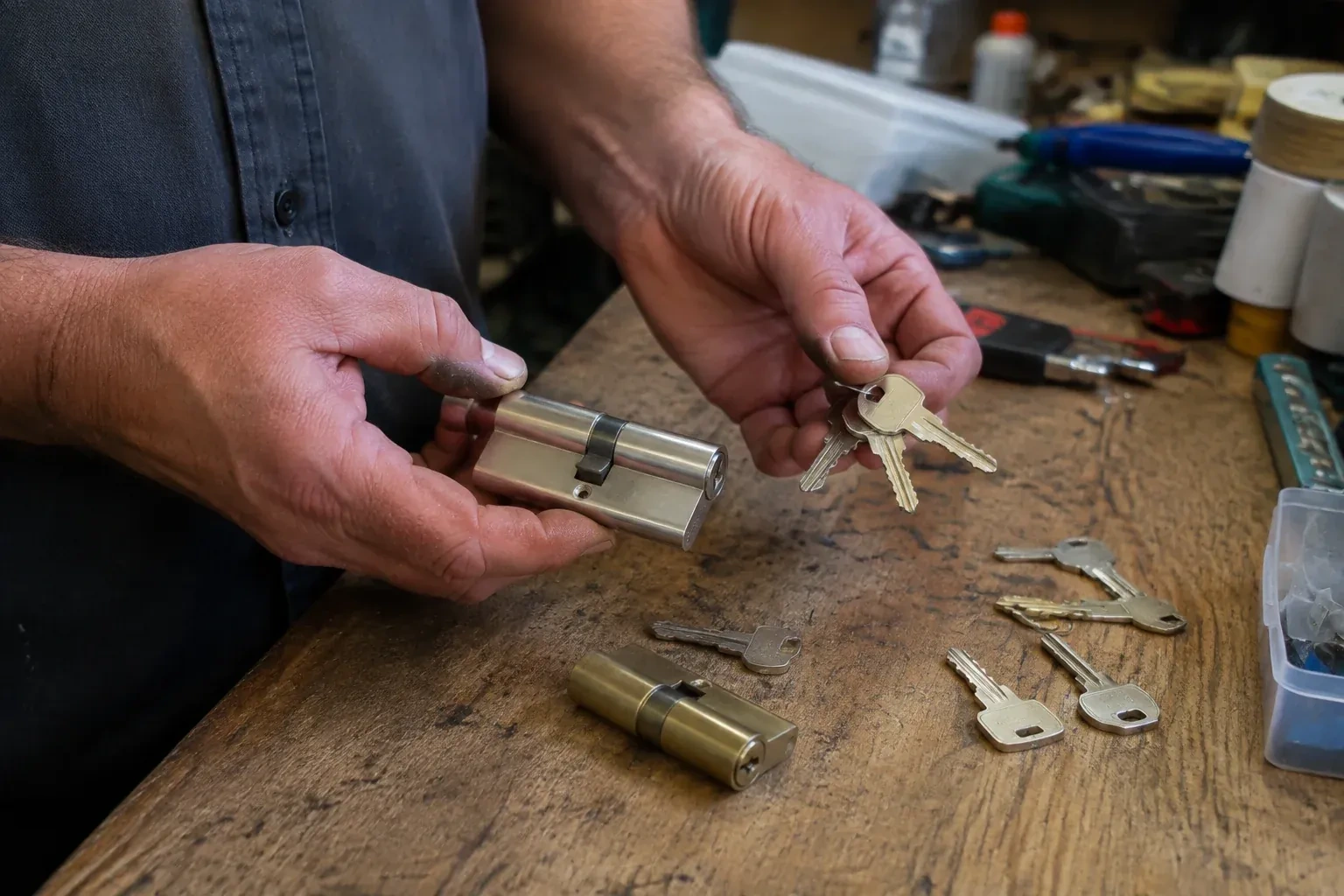
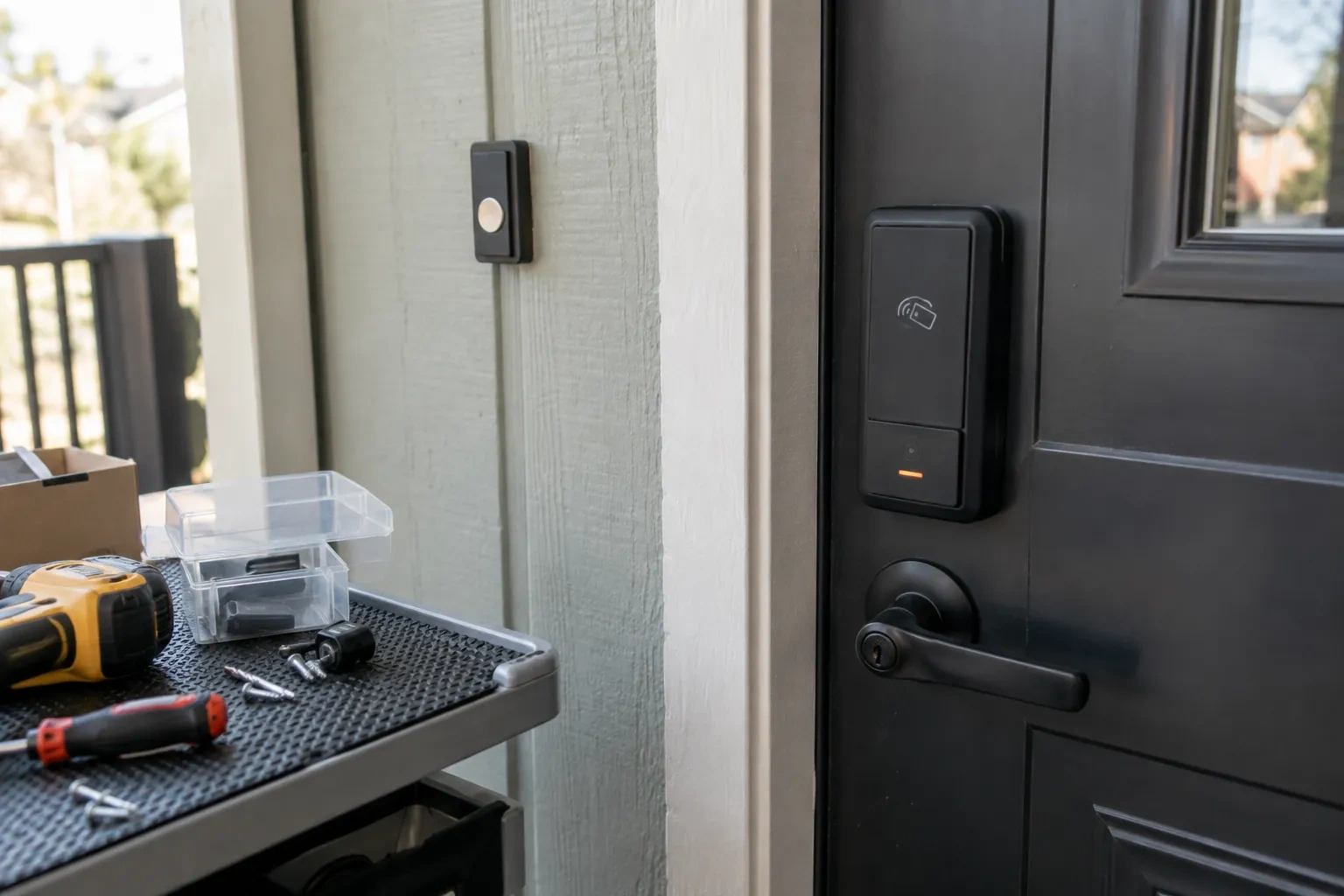
A deadbolt is also a key decision, so the locksmith asks how the household's keys are arranged now. If every door shares one key, the new cylinder can be pinned to that same key, provided the keyways match, so nobody's ring grows. If the house has just changed hands, this is the natural time to set the new bolt and the other exterior locks to a fresh key and retire whatever copies are out there. Restricted or high-security keyways, keypad models with a backup cylinder and locks that must match a rental building's system all steer the choice of hardware, and it is easier to settle this before the box is opened than after.
Marking and boring a fresh door
With the height agreed, the paper template is folded over the door edge and the two centres are marked: the cross bore on the face and the edge bore on the stile. A boring jig clamps over the door so the hole saw cannot wander, and the cross bore is cut from both faces to leave clean veneer or skin on each side. The edge bore is drilled with a 25 mm bit through the stile until it meets the larger hole. The locksmith then traces the bolt faceplate on the edge and chisels a shallow mortise so the plate sits flush, keeping the cut inside the lines so the edge stays sound.
Looking after it through the seasons
A deadbolt asks for very little, and most of it happens twice a year. In spring and again in autumn, throw the bolt with the door closed and notice whether it still slides in freely; wood doors swell in humid summers and shrink in dry winter air, and the first sign is a bolt that needs the door pulled before it will lock. If so, a small strike adjustment puts it right. Give the bolt and keyway a puff of whatever lubricant the lock's own maker specifies, often dry PTFE or graphite, since some cylinders are serviced with oil instead. Wipe salt off the outside trim after a slushy week so the finish stays bright.
Deadbolt Installation
In the van
Boring jig and 54 mm hole saw
75 mm (3 in) strike screws
Single-cylinder deadbolt
Rekeying pins and key blanks
Dry PTFE lubricant
Deadbolt Installation
What affects the quote
Door and hinge corrections
A sagging door, loose hinge screws or thick weatherstrip are put right before a bolt is fitted, and that adjustment is quoted as its own line rather than folded into the lock.
Storm door or restricted clearance
A tight storm door, a narrow lock stile or a decorative panel at bolt height can require low-profile trim or a shifted position, which is settled and quoted at the assessment.
Removing and disposing of the old hardware
Some visits end with the old deadbolt and strike left with the homeowner, and others ask for it to be removed and hauled away. Taking the old hardware away adds a small amount of time and is agreed before the new deadbolt goes in.
What to have ready
- Does the door have to be pulled or lifted before it latches or locks at the moment?
- Would you like a keyed deadbolt, a keypad, or a smart lock you can control from a phone?
- Is the door solid wood, steel-clad or fibreglass, and roughly how thick is it?
Deadbolt Installation: questions
QuestionsSomeone forced my door. Can the new deadbolt go into the same frame?
In most cases, yes. The locksmith examines the jamb for splits and stripped screw holes, glues and pins any cracked section, and fits a full-length jamb reinforcer under the strike so the new long screws bite into sound wood and the stud behind. A new pocket is bored to the correct depth. Where the jamb is beyond repair, replacing that section of frame is discussed before any lock goes on.
Will drilling a new deadbolt damage my steel or fibreglass door?
Not when it is done for that door. Steel-clad doors are cut with a fine-toothed hole saw run slowly through the skin, guided by a jig so the saw cannot skate on the smooth face, and finished from both sides so each skin stays clean. Fibreglass is scored first so the surface does not chip. Shavings are vacuumed from the foam core, and the edge is finished with a collar or plate suited to the stile inside.
I just moved in. Should the new deadbolt be keyed to a new key?
It is a good moment for it. Nobody knows how many copies of a previous owner's key exist, so pinning the new bolt, and the rest of the exterior doors, to one fresh key retires all of them at once. Lock manufacturers list a move as one of the main reasons to rekey. You come away with a known number of keys, each tested in every door it is meant to open.
Related services
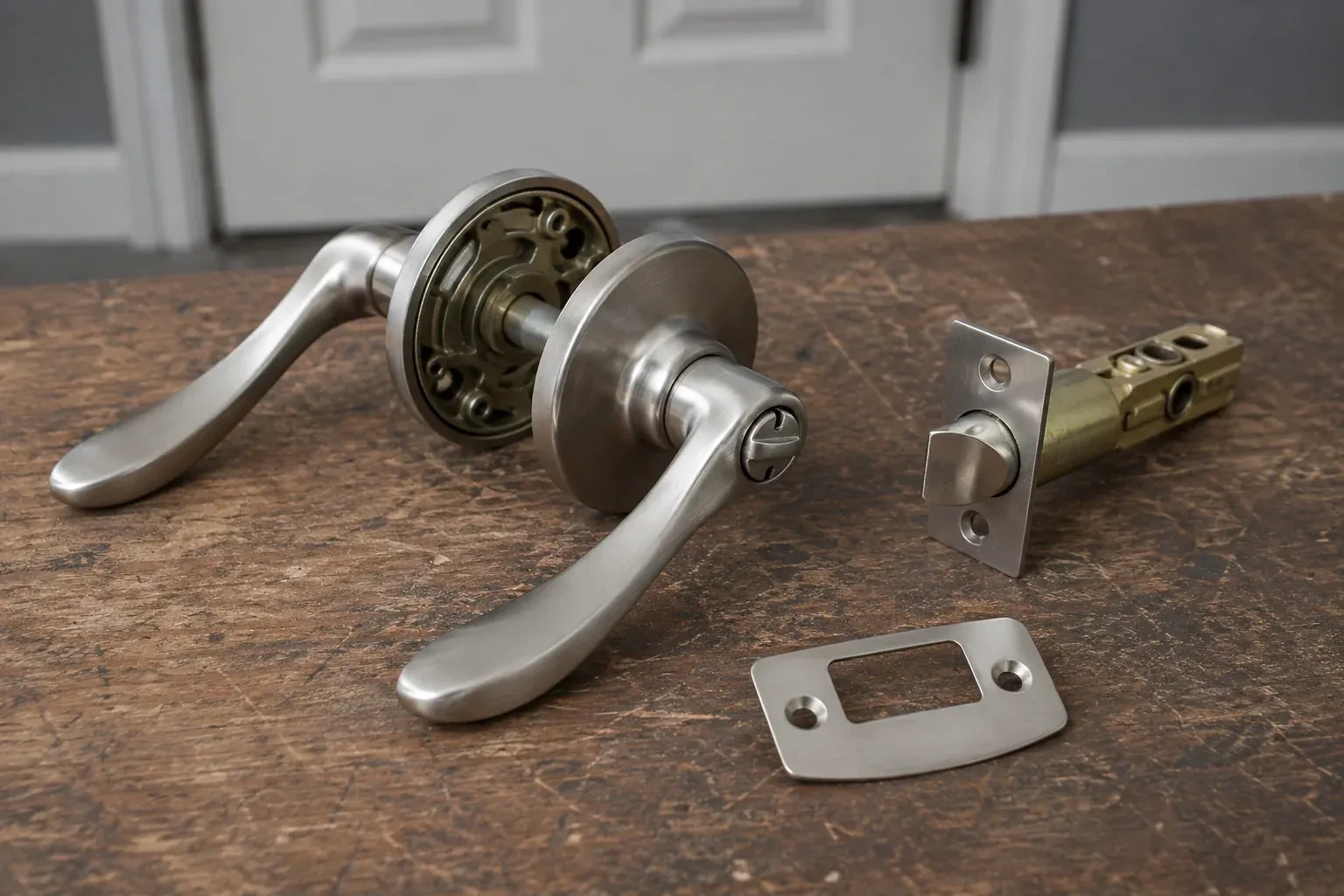
- Lock Replacement & UpgradeThe century home's original mortise lock takes a key the size of a spoon, sticks in humid weather and has worn its strike to a groove.
- Vintage Mortise Lock ServiceThe interior bedroom doors on the second floor have the original mortise latches, and none of them close any more.
- Smart Lock InstallationThe rental turns over every few months and each time you drive across town to swap keys, then wonder whether copies were made.