Commercial · Toronto
Commercial-Grade Lock Replacement in Toronto
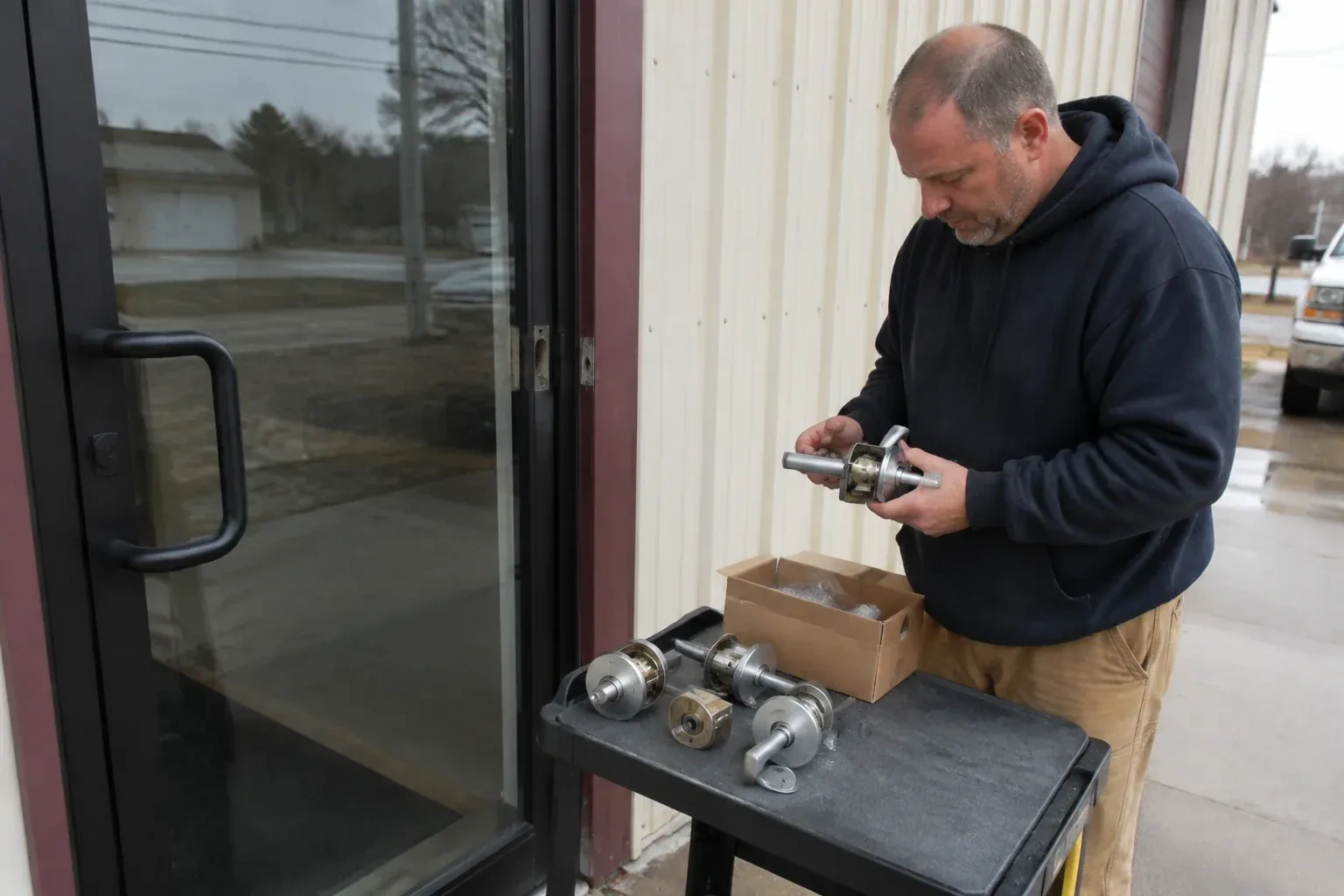
An inspection report flagged the rear exit as needing hardware that opens with one motion and no key, and that door currently has an ordinary keyed knob on the inside.
In plain words
Businesses often reach this service after something specific happens: a break-in, a departing employee holding a working key, a lease turnover, or an inspector's note about the rear exit. Whatever the trigger, the work itself follows the same order. The locksmith assesses the door and its current hardware, agrees with an authorized contact on the keying the new lock should follow, fits hardware rated for the opening's construction and use, and connects it to anything else already wired into that door, such as an alarm contact or an access-control reader, before testing and handing the keys over.
How the visit goesAt closing time the hookbolt on the storefront door catches the keeper only on the second or third try, and one employee has started giving the door a shoulder to force it home.
Commercial-Grade Lock Replacement
How the visit goes

Finding what else is already wired to the door
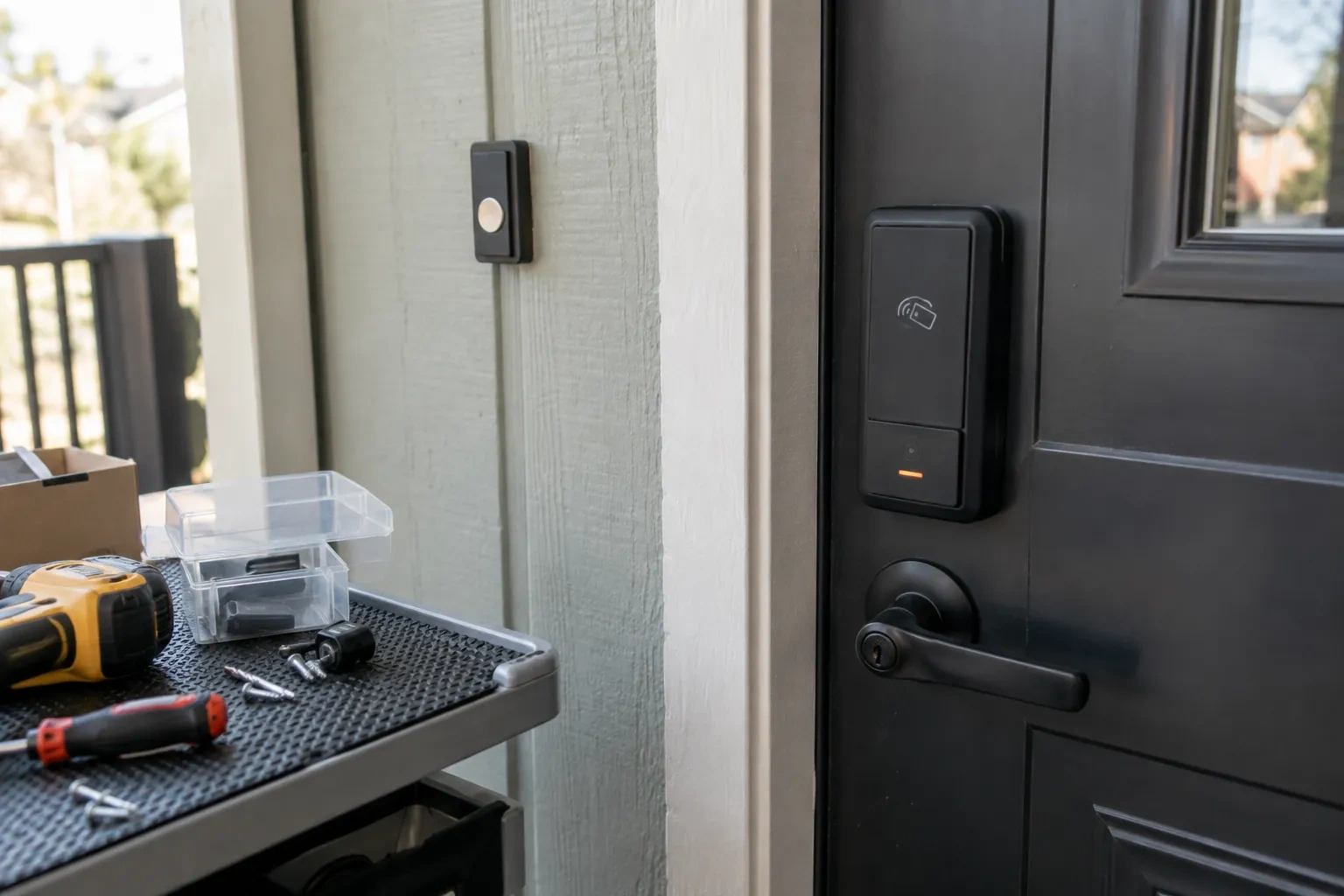
Many commercial openings carry more than a mechanical lock: an electric strike, a maglock, a door position switch feeding an alarm panel, or a card reader tied to an access-control system. The locksmith identifies everything already connected to the opening before ordering replacement hardware, since a new lock has to coexist with that wiring rather than replace it by accident. Where the connected hardware is the actual source of the problem, that gets flagged separately rather than folded silently into a mechanical lock replacement.
Matching the cylinder to the business's key system
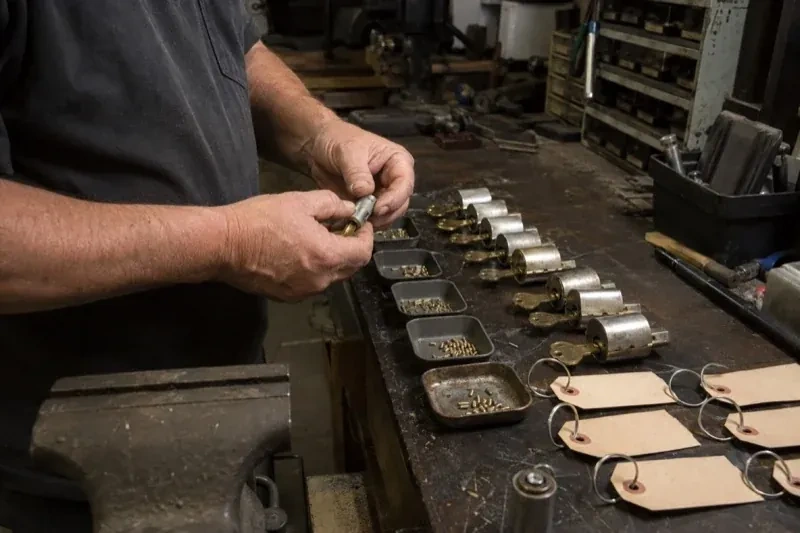
The cylinder installed is the one agreed during the assessment: keyed into an existing master or grand-master system, set up as a new interchangeable core the business can rekey itself later, or cut to a restricted keyway that limits who can order duplicate keys. Where several doors are being brought onto one system in the same visit, cylinders are combinated so a single key or a defined set of keys operates every door that is supposed to share access.
Electrified hardware working as one system
If the door carries an electric strike, a maglock or a card-reader tie-in, that hardware has been tested together with the new mechanical lock rather than left to be sorted out separately. The release button, the reader and the mechanical latch now agree with each other, so staff are not shouldering a door that is supposedly already unlocked. Anyone monitoring the door through an alarm panel or access-control software can confirm the contact reports correctly against the new hardware.
Commercial-Grade Lock Replacement
In the van
Hookbolt and deadlatch hardware
Key cutting and coding machine
Mortise lock body
Electric strike
Mortise prep and installation tools
Commercial-Grade Lock Replacement
What affects the quote
Grade and duty rating of the lock
Hardware built for higher cycle counts and rougher daily handling costs more than a lighter-duty equivalent, and the right grade for a busy delivery door is not the same as for a quiet interior office.
Electrified hardware and access-control integration
An electric strike, maglock or reader tie-in adds parts and testing time beyond a purely mechanical lock, and the quote separates that electrified work from the mechanical hardware so each is clear on its own.
Timing relative to a lease or renovation
Work scheduled around a tenant turnover, a renovation, or a building-wide upgrade across several units can be planned and quoted as a coordinated project rather than a series of separate calls.
What to have ready
- Who can authorize the work and sign for new keys?
- Do other doors on the property share a key with this one?
- How many keys will need to be cut and issued?
Commercial-Grade Lock Replacement: questions
QuestionsDoes an electric strike need to match a specific lock function?
Yes. An electric strike has to suit the latch or deadlatch type it will receive, the door's handing and swing, and whether the application needs fail-safe or fail-secure operation, meaning whether the door should unlock or stay locked if power is lost. Choosing a strike without checking these against the mechanical lock is a common reason a door releases electronically but still binds mechanically.
Do exit devices need any ongoing attention after installation?
Yes. Exit devices and panic hardware are mechanical assemblies that see heavy use on a required exit, so periodic checking that the latch engages fully, the release bar moves freely, and any electrified or alarmed function still triggers correctly is worth building into the same schedule as other fire-safety equipment in the building.
Can you replace just the cylinder instead of the whole lock body?
Often, yes, particularly with an interchangeable-core system where the core is designed to be swapped without removing the lock body from the door. Where the lock body itself is worn, damaged or of a grade that no longer suits the door's traffic, replacing the cylinder alone would leave the underlying problem in place, so the locksmith says which option actually fits the situation found.
Related services
- Master Key System DesignA dental office wants the front desk to lock up at night without ever holding a key to the room where patient records and controlled supplies are stored.
- Access Control InstallationThe back door of the shop runs on one key, and by now it lives on six different rings: yours, two managers, a cleaner, a supplier who restocks early, and a keyholder nobody quite remembers approving.
- Panic & Exit HardwareThe crossbar on the loading-dock door barely returns anymore.