Commercial · Silver Hills
Commercial Rekeying in Silver Hills
The drawer behind the counter holds a tangle of keys with tape labels: front old, side, Dave.
In plain words
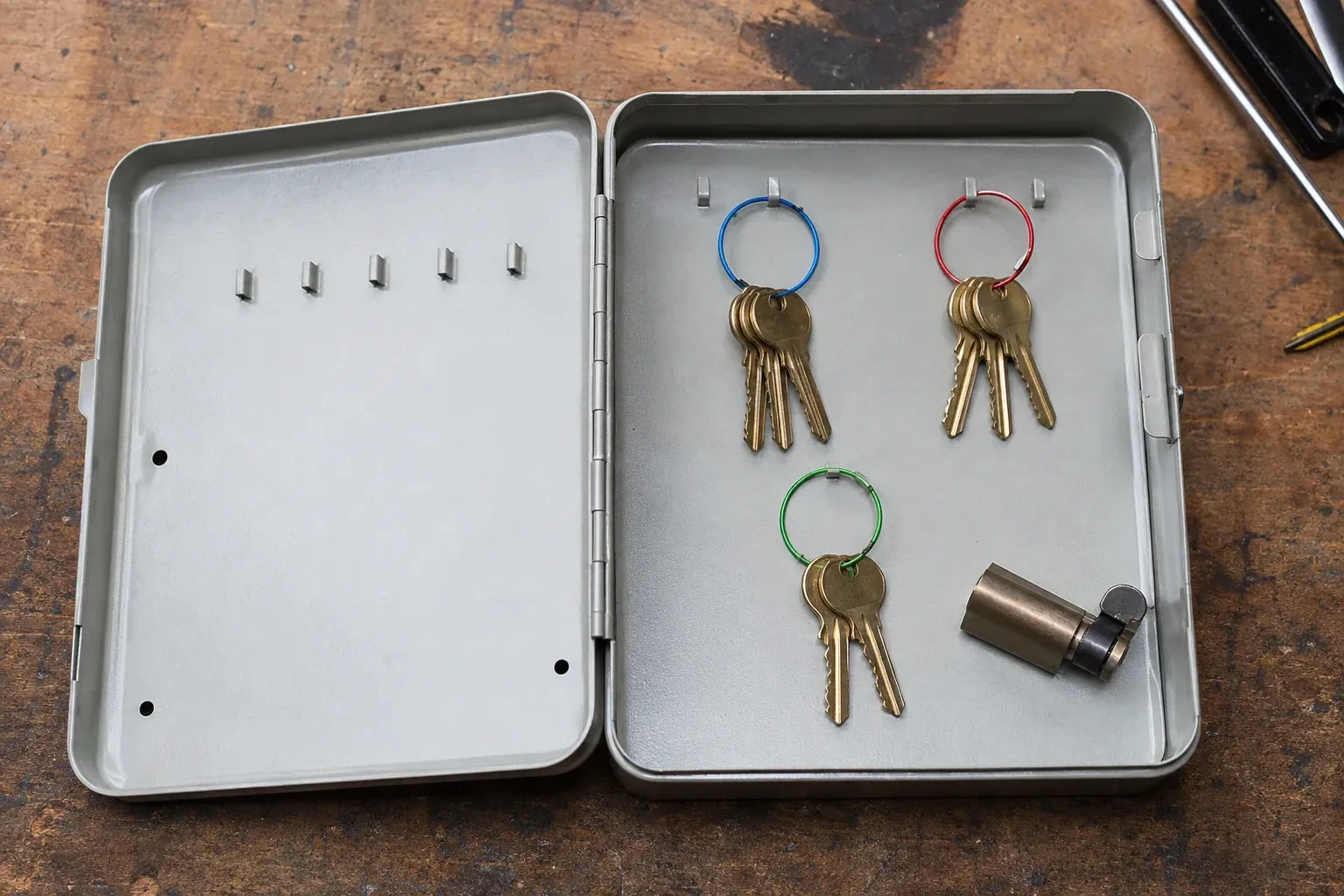
Changing the locks answers today's question; key control keeps it answered. During a commercial rekey the new keys are stamped with a serial code rather than the business name or address, so a dropped key tells its finder nothing. Each key is logged against the person who receives it, and the old keys are collected and cut up on the spot. For premises that want copies kept out of hardware stores, the cylinders can be set up on a restricted keyway, with blanks released only against a signed authorization. What you end up with is a set of locks whose keys you can account for years later.
How the visit goesTwo people left over the summer and the keys they handed back came up one short. Nobody is sure whether the missing key was for the front door, the stockroom or both, and the sign-out sheet stopped being filled in a year ago.
Commercial Rekeying
How the visit goes
Which doors are the landlord's
In a plaza, an office building or a multi-tenant industrial unit, some doors on your floor plan are not yours to rekey. Corridor doors, electrical and mechanical rooms, shared loading doors and the building's fire exits usually sit on the landlord's master system, and a suite entrance may be required to accept the landlord's key as well as yours. The locksmith sorts the openings into two columns before starting: those the lease puts under your control, which get the new plan, and those that stay as they are or need the property manager's say-so. Where a suite door must accept both a tenant key and the building master, it is pinned to do exactly that.
Cutting and marking the new keys
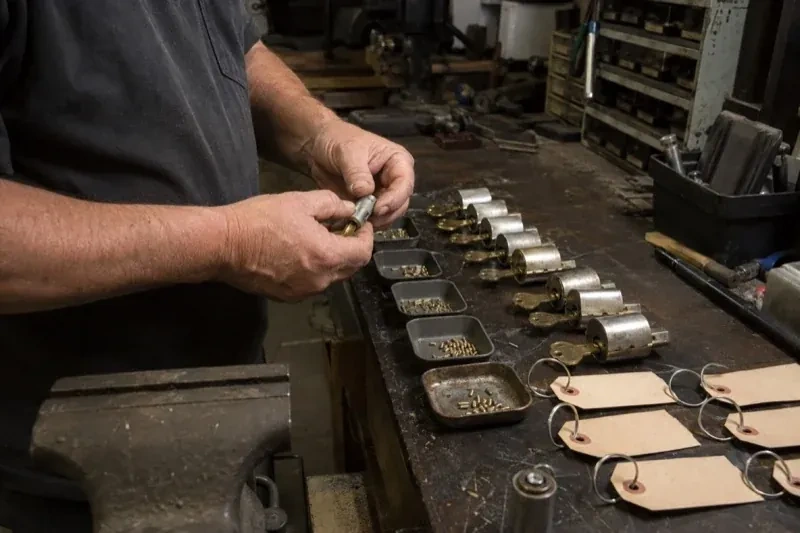
Keys are cut to the new combinations on a code machine rather than traced from another key, so every copy is exact and the tenth key fits as cleanly as the first. Each key is stamped with a short code that means something only on the keying chart; the business name, the address and the word for the door it opens stay off the metal, so a lost key gives nothing away. Keys are counted out by group, tagged, and listed against the names of the people who will carry them. Where the plan uses a restricted keyway, the blanks are drawn against the authorization letter, and that letter is filed with the chart for future orders.
Exits that still open the way they must
Rekeying changes who can come in; it never changes how people get out. Every exit door and every door on the way to one is left opening from the inside with a single motion and no key. On a door with a panic bar, the outside cylinder simply controls entry, and the bar keeps working exactly as before. Once the locksmith has finished, walk the exit routes yourself, push each bar and turn each thumb-turn, and make that walk a habit at the start of every season so a new deadbolt or a helpful padlock never creeps onto an exit.
Commercial Rekeying
In the van
Plug follower
Dry graphite or PTFE lubricant
Rekeyable padlocks
Interchangeable cores and control key
Code key machine
Commercial Rekeying
What affects the quote
Distance to the premises
Travel to the site is part of the call-out, and a unit in a downtown plaza and one at the end of a rural industrial road are different trips.
After-hours or split visits
Work done after closing, before opening or split across two visits to suit trading hours costs the same amount as a single daytime block. The exact figure is confirmed on site once the number of cylinders and the keying plan are known.
Upgrades chosen on the day
Some businesses use the visit to move to interchangeable cores, add a lockbox for the alarm company or fit a heavier cylinder on the cash room. Each is a separate line you can accept or leave.
What to have ready
- Are any cylinders stiff, loose or hard to turn at the moment?
- How many doors, padlocks and cabinets do you want included, and where are they?
- Who at the business has the authority to approve changing the locks?
Commercial Rekeying: questions
QuestionsWill rekeying affect our alarm system or card readers?
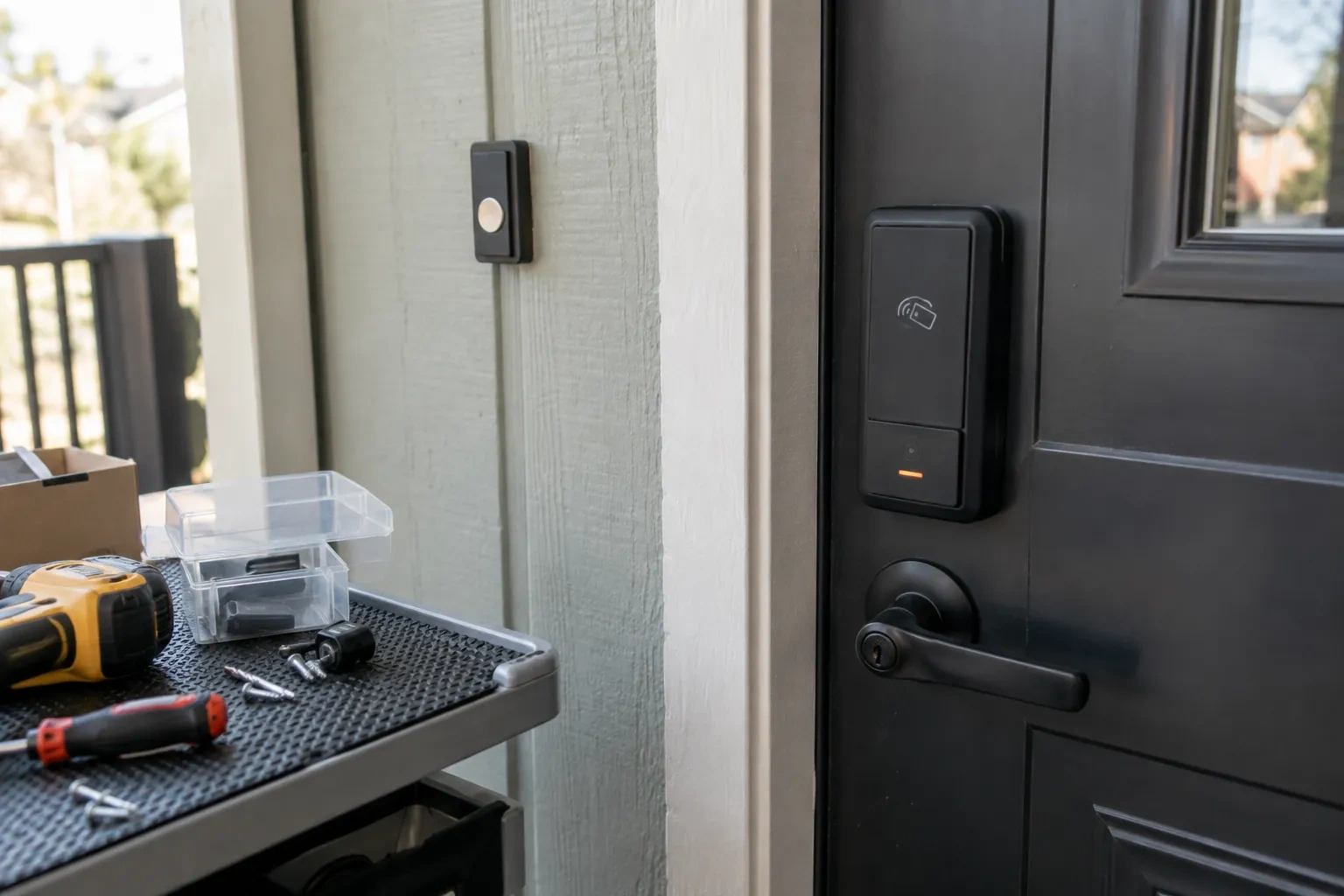
Mechanical rekeying leaves electronics alone: alarm panels, card readers and keypads keep their codes and credentials. What changes is the list of people holding keys, and it is worth updating the alarm company's keyholder list and retiring the codes of anyone who has left at the same time, since keys and codes usually walk out together. Where a door has both a card reader and a keyed override, the override cylinder is rekeyed with the rest.
How long should we set aside for a commercial rekey?
It depends on the count and the mix. A shop with a front door, a back door and a stockroom is a short visit; an office suite with a dozen lever sets, a master key plan and a mailbox takes a good part of a day. Interchangeable cores are the shortest of all, since they are swapped rather than repinned on site. The locksmith gives a time estimate at the assessment, once every cylinder has been counted.
Can the aluminum storefront door on our unit be rekeyed?
Yes. The narrow stile of a storefront door houses a screw-in mortise cylinder secured from the edge, and it unthreads, is repinned and screws back in like any other. What the locksmith watches is the cam: it has to suit the hook or deadbolt mechanism inside the door and sit at the correct depth, or the bolt throws short. Weather-facing cylinders showing salt wear are pointed out so you can decide on replacement.
Related services
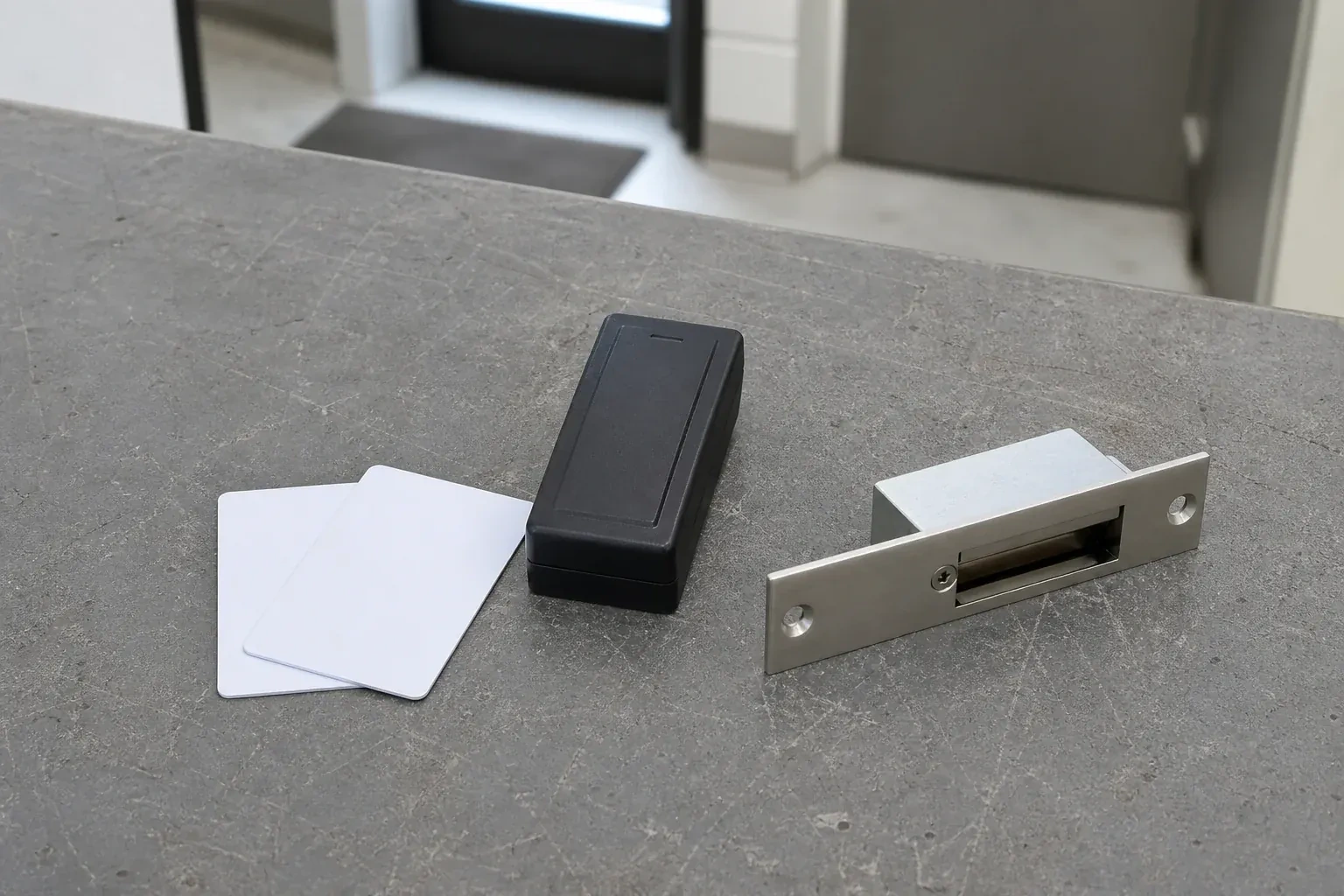
- Access Control InstallationThe back door of the shop runs on one key, and by now it lives on six different rings: yours, two managers, a cleaner, a supplier who restocks early, and a keyholder nobody quite remembers approving.
- Panic & Exit HardwareThe crossbar on the loading-dock door barely returns anymore.
- Commercial-Grade Lock ReplacementAn inspection report flagged the rear exit as needing hardware that opens with one motion and no key, and that door currently has an ordinary keyed knob on the inside.