Car keys · York Mills
Transponder Key Programming in York Mills
The car came with a single key when the sale went through, and that key is the only thing standing between the household and being stranded.
In plain words
Not every transponder chip is built the same way. Early systems used a fixed code that repeated every time, while current vehicles increasingly use encrypted challenge-response chips that answer a different, unpredictable exchange with the immobilizer on every start. Identifying which generation a given vehicle uses tells the locksmith which programming approach and which chip family the new key needs, since a chip from the wrong family will not answer that system at all.
How the visit goesIt is a cold morning and the fob has to be pressed twice, sometimes three times, before the doors respond, and one week later it stops answering entirely. The metal key still turns the lock by hand, but the dashboard security light stays lit through the whole drive.
Transponder Key Programming
How the visit goes
What the finished set should look like
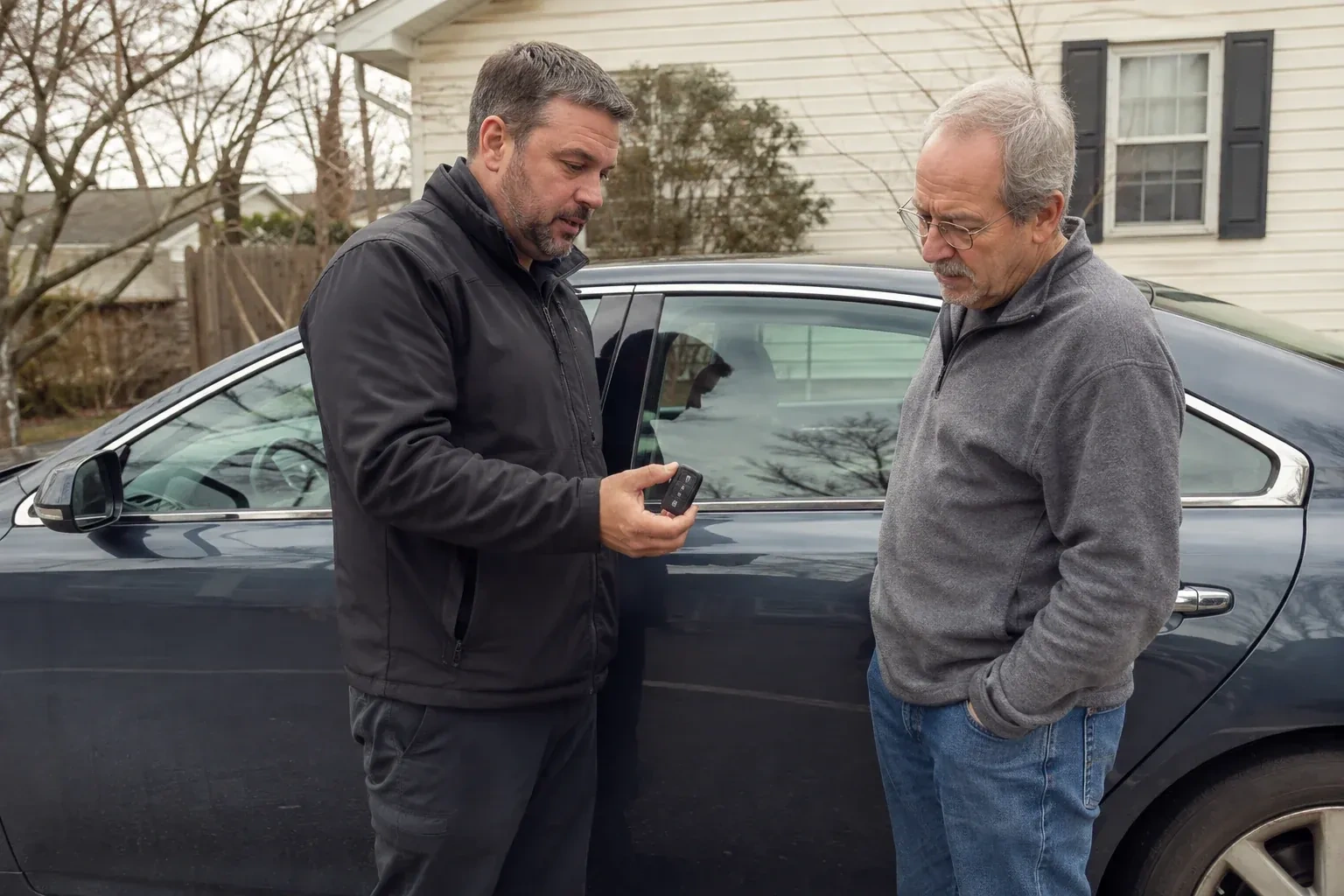
Not every visit ends the same way. Someone who lost their only key wants a working replacement and nothing more. A family adding a driver wants an extra key without disturbing the ones already in daily use. Someone who has never had a spare wants one made and proven before it is ever needed. Asking how many keys should work afterward, and for whom, shapes the whole visit before a single tool comes out, and it is answered in plain terms rather than assumed.
Programming through the diagnostic port
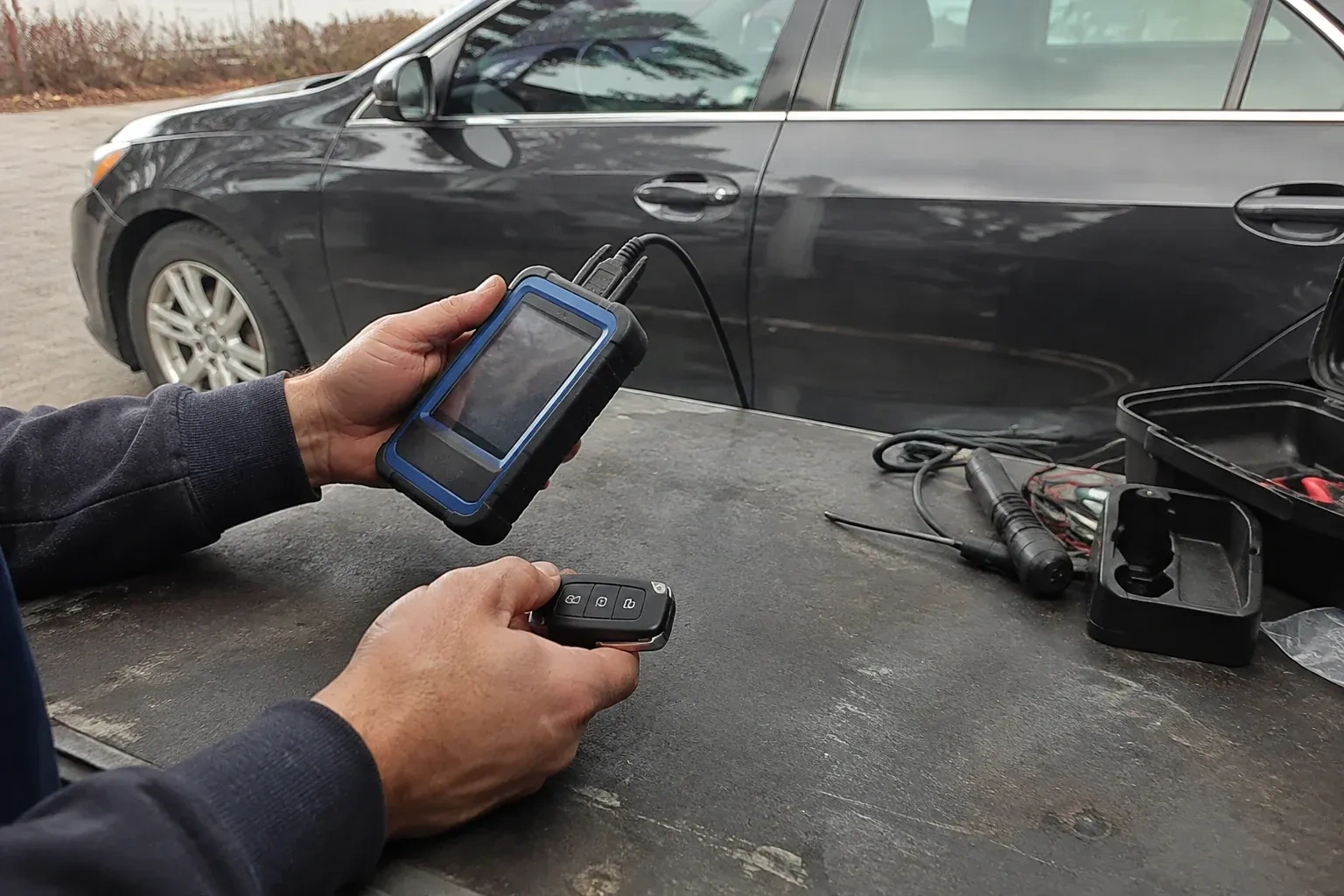
On most vehicles, the new chip's identity is written into the immobilizer through the onboard diagnostic port using equipment built for that vehicle's own protocol. The programmer talks to the vehicle's module in its own language, adds the new key without erasing the others unless asked, and confirms the write was accepted before the tool disconnects. This is the routine path for a spare, an extra key, or a straightforward replacement where at least one working key is still available to authorize the addition.
Leaving with a full set of working keys
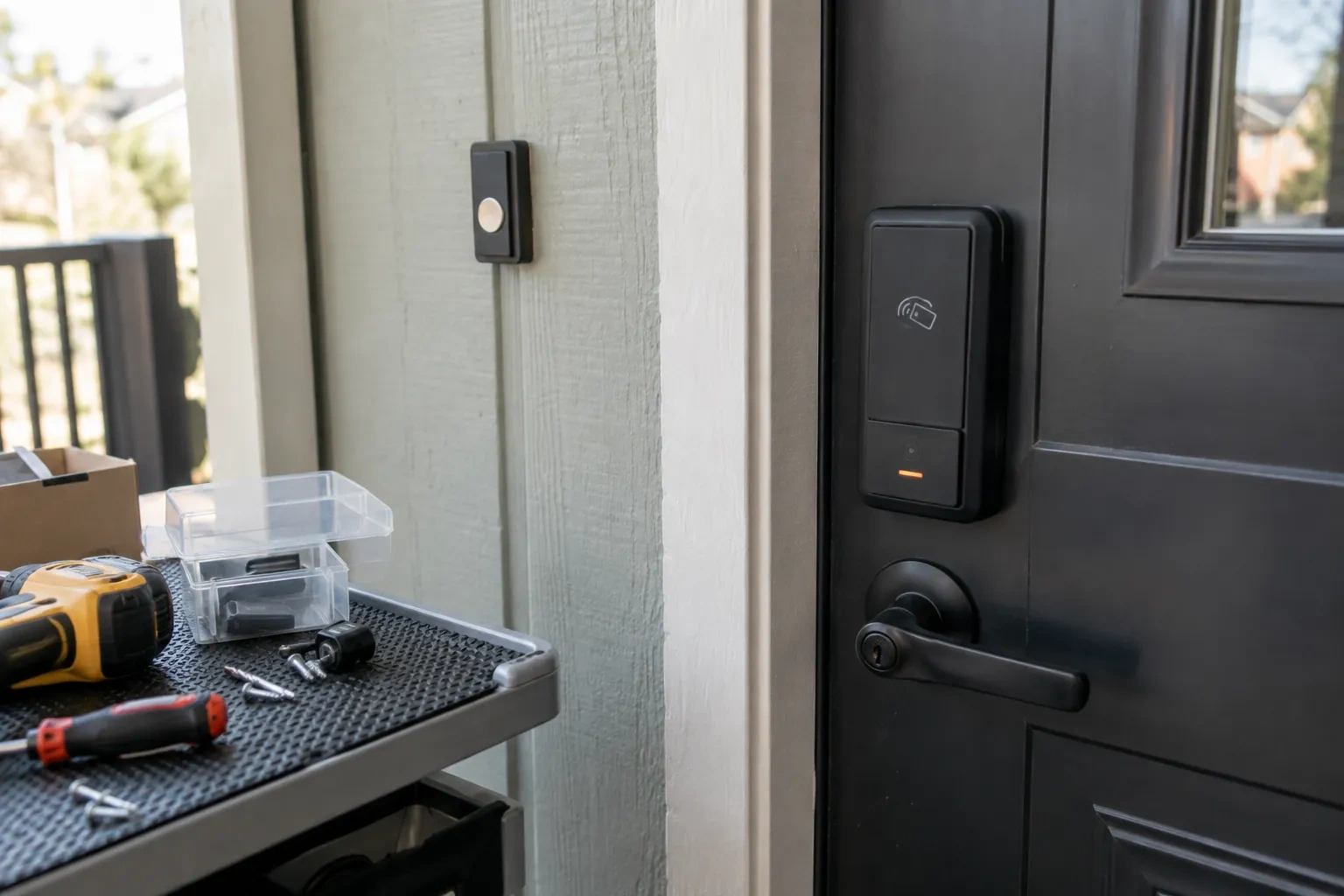
The visit ends with every key that should work actually tested in the driver's own hands: the new one, and any older ones that were meant to keep working. Remote functions, if the vehicle has them, are checked at a normal distance, and the emergency insert on a proximity fob is pointed out rather than left for the owner to discover later. Nothing is assumed finished on the strength of a screen reporting success; the engine and the fob both had to prove it directly.
Transponder Key Programming
In the van
Replacement remote-head fob
Fob battery
Key cutting machine
Chipped key blank
Frequency test reader
Transponder Key Programming
What affects the quote
Any extra function added to the new key
Pairing remote entry, trunk release, or proximity walk-up functions onto a new key is additional work beyond the immobilizer chip alone, and each function is confirmed working before the visit is considered finished.
How the vehicle's key list is reached
Some vehicles allow direct access through the onboard diagnostic port, while others gate that list behind a manufacturer-level security session that takes additional steps to establish. Which situation applies to a given vehicle affects how the visit is scoped.
Aftermarket alarms or remote starters already installed
A vehicle with an aftermarket alarm or remote starter wired into its ignition circuits may need extra time to confirm how that system interacts with the factory immobilizer before a new key is programmed.
What to have ready
- Has an aftermarket alarm or remote starter been installed?
- Where is the vehicle parked right now?
- Is the key a basic blade, a remote-head, or push-button proximity?
Transponder Key Programming: questions
QuestionsMy key turns and the engine cranks, but it won't start. Is that this?
That pattern, the starter turning the engine over without it catching, often points to the key or immobilizer rather than a fuel or ignition-timing fault. A flashing security light on the dashboard while this happens adds to that picture. A diagnosis, checking whether the vehicle actually recognizes the key's chip, is what confirms which one it is before any programming begins.
Are some vehicles only able to have keys programmed by a dealer?
Many recent models, particularly ones with additional security layers, require a manufacturer-level session that only certain equipment can reach. Older and simpler systems more often allow direct programming without that extra step. The locksmith can usually confirm which situation applies to a specific vehicle from its year, make and model before the visit.
How do I know if this is a key problem rather than something else?
The clearest sign is the engine cranking normally, meaning the starter motor turns it over, but never catching, often alongside a flashing security light. A fuel or mechanical fault usually behaves differently, such as cranking slowly or making unusual noise. Describing exactly what happens when the key is turned helps the locksmith tell the two apart before arriving.
Related services
- Car Key ReplacementThe engine cranks, catches for a second and dies, and a small key-shaped light keeps blinking on the dash.
- Spare Car Key DuplicationA teenager just passed a driving test and reasonably wants a key of their own rather than negotiating over the family's single copy every time the car is needed.
- Key Fob ProgrammingA new driver has joined the household, and the one existing fob is the only key anyone has ever had cut for this vehicle.